
Nigeria has formally endorsed the Revised National Drought and Desertification Policy, reinforcing its resolve to confront escalating environmental degradation and climate-related threats.
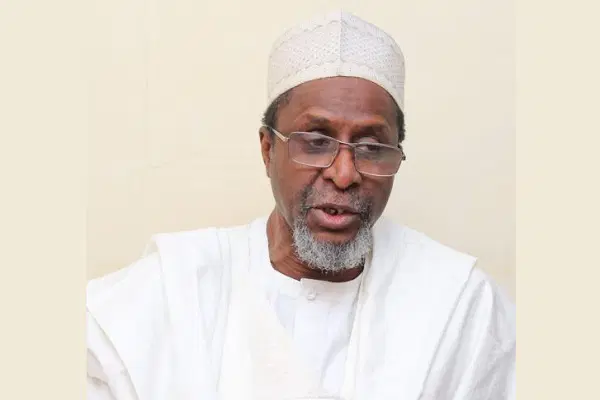
Speaking at the opening of the Stakeholders’ Validation Workshop in Abuja, the Minister of Environment, Mr Balarabe Lawal, described the exercise as a critical step towards ensuring that Nigeria’s response to desertification, land degradation and drought is practical, inclusive and fit for present and future realities.
Represented by the Permanent Secretary, Mr Mahmud Kambari, the minister explained that the validation exercise was more than a procedural requirement, as it allows stakeholders to rigorously examine the policy’s goals, strategic focus and implementation framework.
“I therefore encourage you to engage actively in the technical sessions, working groups, and discussions share your experiences and propose practical solutions. Approach this validation process with openness, professionalism, and a common purpose. The quality of our engagement here will directly influence the strength and relevance of the final policy document,” he said.
Mr Lawal disclosed that the revised policy emerged from an extensive review process that commenced on 2 July 2025, drawing participation from stakeholders across the 36 states and the Federal Capital Territory. He noted that the review was shaped by increasing climate risks, rapid population growth, land-use pressures and evolving socio-economic conditions.
According to him, “the policy must reflect Nigeria’s diverse ecological zones and promote coordination across key sectors such as agriculture, water resources, environment, energy, and rural development, while clearly defining roles, financing options, and monitoring frameworks.”
He assured participants that the policy would not be allowed to gather dust, stressing that the Federal Government would drive its implementation through strong collaboration with the private sector, civil society organisations, research institutions, development partners and local communities.
The minister further observed that drought and desertification continue to affect millions of Nigerians, particularly in arid and semi-arid areas, with far-reaching implications for agriculture, water supply, food security, biodiversity and overall socio-economic stability, challenges that are being intensified by climate change.
Also Read: Kano Launches 5.5m Tree Initiative to Fight Desertification
Earlier, the Director of the Department of Desertification and Drought at the ministry, Mrs Regina Nwaneri, said the existing policy adopted in 2007 no longer reflects current realities, “noting that climate change, environmental degradation, and new global commitments have created urgent gaps.”
She explained that while the earlier policy focused on 11 frontline states, land degradation has since evolved into a nationwide concern affecting all 36 states and the FCT.
Mrs Nwaneri identified climate change as well as sand and dust storms as major emerging threats, explaining that such storms can remove up to 30 centimetres of nutrient-rich topsoil vital for agricultural productivity. She assured stakeholders that the revised policy would be accompanied by a detailed action plan to guide implementation, with ongoing interventions scaled up to meet present and future demands.
Speaking on behalf of the National Project Coordinator of the Agro-Climatic Resilience in Semi-Arid Landscapes (ACReSAL) project, Mr Musa Shaibu reaffirmed the project’s commitment to working with stakeholders to operationalise the policy in pursuit of Nigeria’s environmental protection, land restoration and climate resilience goals.
“As important as today’s validation is its success will be meby how effectively we translate policy into coordinated action on ground the ground. Tackling drought and desertification requires robust partnerships across government department partners, civil society the private sector and local communities,” he added.
Also speaking, the Food and Agriculture Organisation (FAO) Representative in Nigeria and to ECOWAS, Dr Hussein Gadain, represented by Mr Precious Agbesor, described drought and desertification as among the country’s most critical environmental and development challenges, calling for inclusive and climate-responsive policies anchored in national and local contexts.
“Drought and desertification remain among the most pressing environmental and development challenges facing Nigeria, addressing these challenges therefore requires strong policies that are inclusive, forward-looking, climate-responsive, and firmly rooted in national and local realities,” he said.
He reaffirmed FAO’s commitment to supporting implementation of the policy, noting that it aligns with Nigeria’s obligations under the United Nations Convention to Combat Desertification (UNCCD) and the Sustainable Development Goals, particularly Goals 1, 2, 13 and 15.
The revised policy also aligns with Nigeria’s Land Degradation Neutrality targets, further strengthening the country’s commitment to sustainable land management. The validation workshop was organised by the Department of Desertification, Land Degradation and Drought Management of the Federal Ministry of Environment, with support from the ACReSAL project.
