
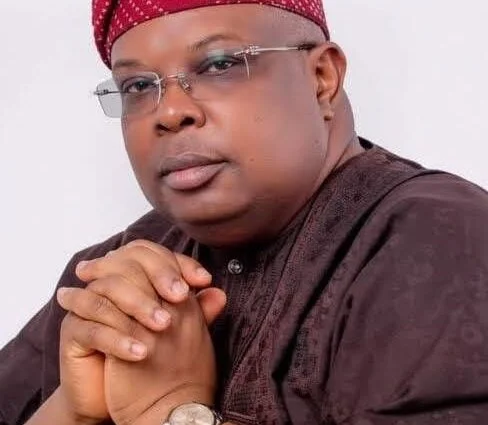
The Nigerian Government has approved plans to develop new eastern and western electricity grids to strengthen Nigeria’s transmission network and address recurring national grid collapses.
The Minister of Power, Joseph Tegbe, disclosed this at the recent HBSAN energy conference in Lagos, saying the government was preparing to begin the procurement process for the projects.
Tegbe said Nigerians could begin to experience the benefits of the new infrastructure within two to three years.
He explained that the government had divided the country into three energy zones to guide interventions, with priority given to areas with the highest electricity demand, particularly Lagos and the Abuja corridors.
READ ALSO: NBET Begins N728.98bn Debt Settlement to Power Firms
According to him, addressing transmission challenges in these areas would resolve more than half of the country’s power sector problems, but this would require substantial improvements to the national grid.
“The President has approved that we commence the process of building out the grid: East and Western grid. We’re going through the procurement process, but it’s something you’ll see the benefits in two to three years,” he said.
The minister also said a nationwide technical audit of electricity infrastructure is underway to identify faults, assess the condition of facilities, and determine which areas need urgent attention.
He said the exercise would help the government direct resources towards the actual causes of transmission failures rather than repairing equipment that was not responsible for the problems.
“We have started a technical audit across the entire country to say where do we have issues, and what issues specifically do we have,” Tegbe said.
He added that the audit would be completed within the next few weeks, after which the government would focus on priority areas.
Tegbe attributed some of the challenges facing the transmission network to ageing infrastructure, noting that some transmission towers and lines had been in service for about 50 years.
He said certain facilities dated back to the era of the Electricity Corporation of Nigeria (ECN), which preceded the National Electric Power Authority (NEPA).
The minister said the condition of the inherited infrastructure highlighted the longstanding nature of the challenges facing Nigeria’s electricity transmission system.
