
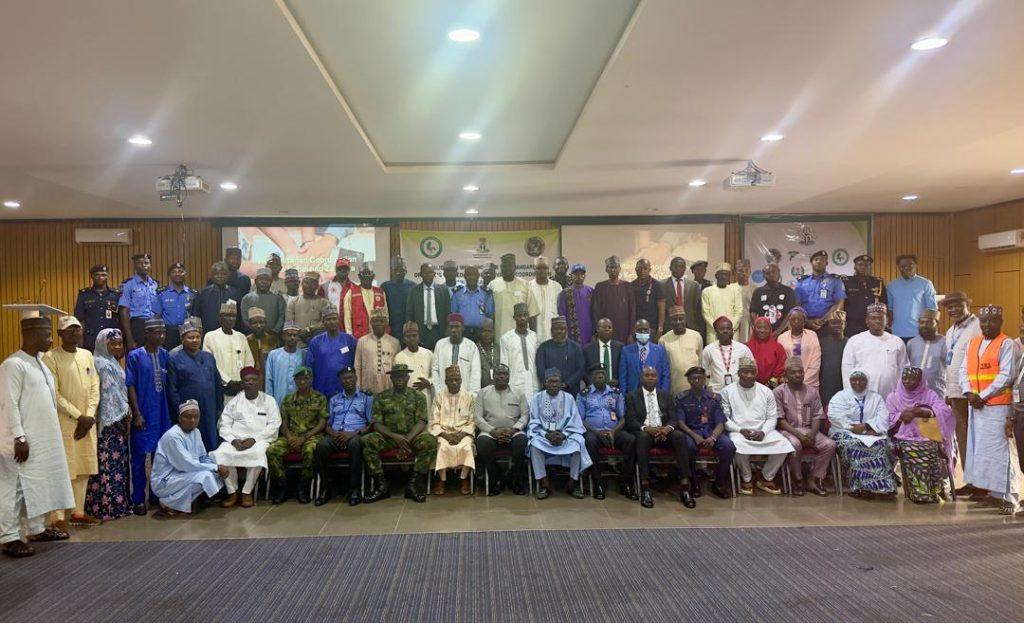
The United Nations Children’s Fund (UNICEF), the National Emergency Management Agency (NEMA), and other key stakeholders have emphasised the urgent need to enhance humanitarian coordination across Sokoto, Kebbi, and Zamfara states.
This call was made during a Standard Operating Procedure (SOP) validation workshop held in Sokoto, organized by the humanitarian affairs ministries of the three states with support from UNICEF. The aim of the workshop was to streamline disaster response mechanisms to ensure quicker, more coordinated, and efficient interventions during emergencies.
UNICEF’s Chief of Field Office, Mr. Michael Juma, highlighted the significance of the exercise, describing it as a major stride toward improving humanitarian response systems in Nigeria’s North-West region.
“It begins with emergency trigger and notification, clearly identifying lead agencies, activation triggers and alert mechanisms. Search and Rescue arrangements follow, covering search and rescue team mobilisation, evacuation protocols and public communication,” Juma explained.
He described the SOP as a detailed and practical guide that outlines steps for humanitarian actors from the initial emergency trigger to the final stage of response emphasising that effective partnerships between agencies are essential for success.
Also contributing, UNICEF Emergency Specialist Mr. Olayinka Afolabi noted that the SOP provides a clear framework for immediate action when emergencies occur.
The SOP ensures that once an emergency is confirmed, state emergency operation centres and multi-sectoral coordination platforms are immediately activated,” he said.
He added that the framework includes all key components of emergency management: rapid needs assessments, operational planning, stock mobilisation, implementation, service delivery, as well as ongoing monitoring and the issuance of regular situation reports to keep the public informed.
Speaking on behalf of NEMA, the Head of its Sokoto Operations Office, Mr. Aliyu Shehu Kafindangi, was represented by Mr. Tukur Abubakar, Head of Planning Unit. He commended UNICEF and all participants for their contributions to the development of the SOP.
“The developed draft SOP has reflected ground realities, designed to respond to emergencies like cholera, crises, and floods. This is coming at a time that stakeholders in disaster management described as timely due to the flood already affecting many communities,” Kafindangi stated.
Also Read: UNICEF, UNIZIK Launch Institute of Social Policy
He added that stakeholders had collectively mapped institutional responsibilities, streamlined communication pathways, and agreed on operational workflows for various emergency scenarios. This, he said, would lead to greater role clarity and improved inter-agency collaboration.
The workshop brought together a wide range of participants, including officials from the Federal and State Fire Services, State Emergency Management Agencies of Sokoto, Kebbi, and Zamfara, representatives from NGOs, the Nigeria Police Force, disaster response units of the Nigerian Army, the Association of Local Governments of Nigeria (ALGON), and the Ministries of Health and Agriculture.
