
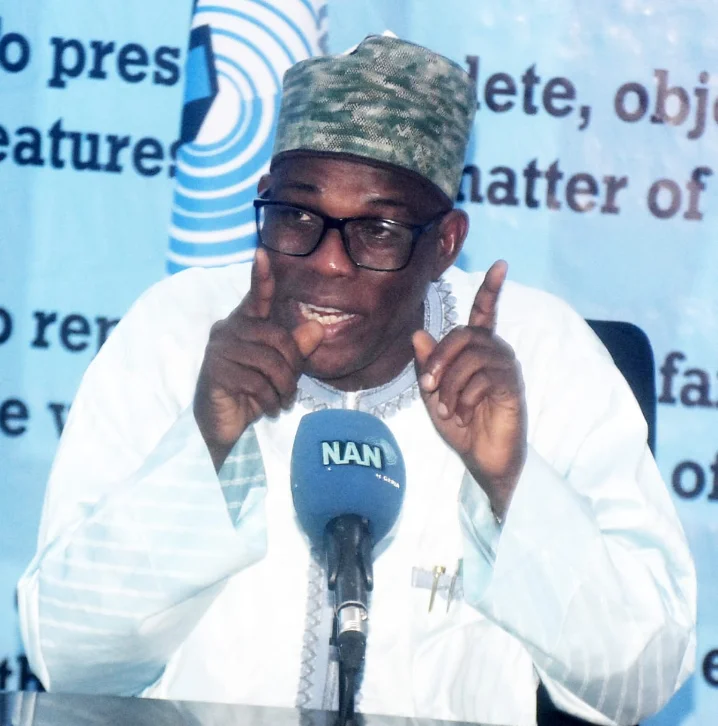
Sokoto State Government says it is working to fully digitalise its basic and primary education within the next two years.
The Commissioner for Basic and Secondary Education, Prof. Ahmed Ala, stated this in an interview on Monday in Abuja.
Ala said that a fully digitialised education system would aid the quality of teaching and learning in the state.
According to him, this will also make it easier for government to supervise workers in the system, particularly teachers as well as keep track of policy implementation in the education sector.
“We want to fully digitise the information system in basic and secondary education in Sokoto State.
“This will help us to assess teachers and principals’ performance on key performance indicators, including teaching and regularity in classes.
“It will also help us to track how they carry out other functions and keep administrative records,” he said.
Ala said that so far, the digital platform had enabled the state government to rank basic and secondary schools in the state.
Also Read: Stakeholders Urge Youth-Led Drive for Nigeria’s Digital Economy Transformation
According to him, those with 14 points and above are ranked as very good schools, while the ones with six points and below are ranked as poor schools.
He said that the initiative, Education Management Information System (EMIS), would provide a very effective platform on infrastructure, ICT, libraries and all other relevant information at the fingertips.
“The digitisation will also provide ready information to development partners on our weaknesses and strengths. This will help in planning, execution and policy implementation,’’ the commissioner said
He said while EMIS would come handy in the above-mentioned areas, Teachers Management Information System (TMIS) would be used for similar purpose for the academic staff members.
Ala further noted that the state government was determined to improve the quality of teachers in recognition of their importance in achieving a truly literate society.
“We are also radically and vigorously undertaking teacher training because we found out that so many teachers do not have the necessary knowledge, skills, experience and competence to teach in secondary schools.
“So far, we have done two sets of training, and we have been able to train 2,500 teachers,’’ he said.
