
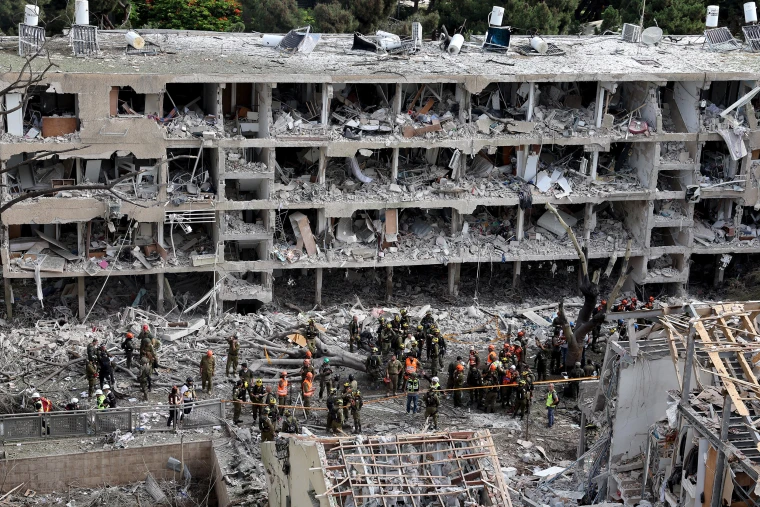
Iran has issued a stern warning that recent U.S. airstrikes on its nuclear facilities have expanded the scope of legitimate targets for retaliation, further escalating tensions in the Middle East.
The warning follows a coordinated U.S.-Israeli military operation, in which American forces launched a series of bunker-buster bomb strikes on key Iranian nuclear sites, including the heavily fortified Fordow facility. The strikes mark the most direct U.S. military intervention against Iran in years and come on the heels of weeks of Israeli aerial bombardment.
Satellite images suggest that Fordow suffered extensive damage. The facility, long suspected by the West of being used for uranium enrichment for weapons, has been at the centre of international scrutiny. Former U.S. President Donald Trump confirmed the strike on social media, calling it a “bullseye” and claiming that “monumental underground damage” had occurred.
While Iran maintains that its nuclear programme is entirely peaceful, the United Nations nuclear watchdog recently reported that Tehran is in breach of its obligations under the Non-Proliferation Treaty.
Although Washington insists its actions are limited to dismantling Iran’s nuclear capacity, Trump’s recent remarks suggest a broader strategic objective, sparking concerns of a prolonged conflict.
Also Read: Trump Confirms US Air Strikes on Iran’s Key Nuclear Sites
Israel Intensifies Military Campaign
In a simultaneous move, Israel launched a new wave of airstrikes targeting Iranian military assets. The Israeli military confirmed that radar, missile, and air-defence systems were hit in Tehran and Kermanshah, along with a missile complex near Parchin, just outside the capital.
Iran’s state media reported the activation of air defence systems over central Tehran and claimed that more than 400 people had been killed in the latest Israeli strikes. The attacks have prompted widespread civilian evacuations from the capital amid growing fears of further bombardments.
Iran retaliated by launching missiles into Israeli territory, killing at least 24 civilians and injuring hundreds more. Israeli forces said they intercepted additional missiles early Monday.
Despite rising hostilities, Iran has yet to target U.S. military assets directly or disrupt traffic in the Strait of Hormuz, a crucial channel through which roughly 20% of the world’s oil supply is shipped. However, the Iranian parliament has passed a resolution to shut the strait, pending final approval from Supreme Leader Ayatollah Ali Khamenei’s top security council.
Oil Markets React and Diplomatic Efforts Underway
Global oil markets responded swiftly to the unfolding crisis. Brent crude spiked briefly above $80 per barrel before retreating to $76.64, as traders monitored the risk of a broader regional conflict disrupting supply chains.
Meanwhile, diplomatic efforts are underway to de-escalate the situation. Iranian Foreign Minister Abbas Araqchi met with Russian President Vladimir Putin in Moscow on Monday to discuss the crisis. While Russia remains a close ally of Iran, it also maintains strong diplomatic relations with Israel.
Speaking earlier in Istanbul, Araqchi said Tehran would explore “all military and diplomatic options” in response to the attacks and firmly ruled out any return to negotiations until full retaliation had been carried out. “This is not a time for diplomacy not yet,” he said.
As tensions continue to rise, world powers are urgently seeking ways to prevent the crisis from spiralling into a wider war in the already volatile region.
