
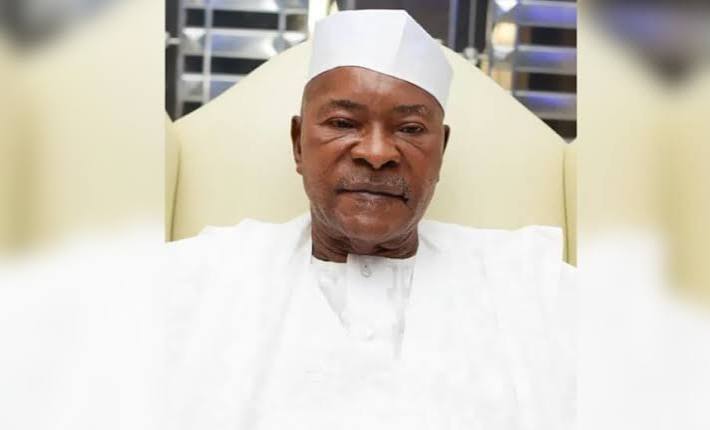
Former Kogi state Governor Ibrahim Idris has died at the age of 77.
Idris died in the United Kingdom on Sunday, according to a statement by the Kogi State Commissioner for Information, Kingsley Fanwo.
Following his death, former Governor Yahya Bello and incumbent Governor Usman Ododo, alongside other dignitaries, visited the deceased’s residence in Abuja to condole with his family.
Ododo has declared three days of mourning in the state and directed that the Nigerian and Kogi State flags be flown at half-mast across government institutions.
In a condolence letter to the family, the governor described Idris’ death as a loss to Kogi State, saying the former governor devoted a significant part of his life to serving its people.
Ododo also announced that Idris would receive a state burial, with the Kogi State Government taking full responsibility for the burial expenses.
The governor said Idris’ administration recorded significant interventions in infrastructure, education, healthcare and other critical sectors, adding that his contributions would remain part of the state’s development history.
“His years in public office formed an important chapter in the political and developmental journey of Kogi State,” Ododo said.
He urged the family to draw strength from the memories of Idris’ service and the impact he made on the lives of many people.
Idris served as governor of Kogi State from 2003 to 2012, having assumed office in May 2003 and secured a second term in the 2007 election. He was succeeded by Idris Wada in January 2012.
Before entering politics, Idris was a businessman with interests in hospitality, construction and furniture manufacturing. He founded Ibro Trading Company and the popular Ibro Hotels.
READ ALSO: Kogi Moves to Establish N50bn Lokoja International Airport
Popularly known as Ibro, Idris was born on April 6, 1949, in Idah, Kogi State.
He attended primary and secondary schools in different parts of Nigeria before obtaining a bachelor’s degree in Law from the University of Abuja.
Idris was elected governor on the platform of the then ruling Peoples Democratic Party.
During his administration, Lokoja, the state capital, witnessed infrastructure projects including the Greater Lokoja Water Scheme, popularly known as “Ibro Water”, housing units for civil servants, school blocks and the Lokoja International Market.
