
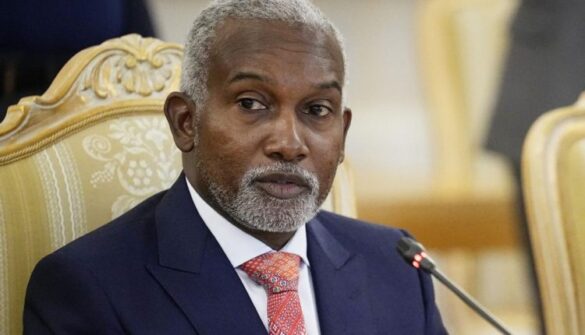
Nigeria’s Minister of Foreign Affairs, Ambassador Yusuf Tuggar, has called for stronger collaboration between the country’s policy and research institutions to promote evidence-based policymaking and sustainable development.
Tuggar made the call in a statement issued on Wednesday by his Special Assistant on Media and Communications Strategy, Alkasim Abdulkadir, ahead of the 31st Nigerian Economic Summit (NES #31).
The minister emphasised the critical roles of the Nigerian Institute of International Affairs (NIIA) and other think tanks in strengthening governance and driving both domestic and foreign policy objectives through research-based insights.
“This entails building a pipeline of ideas, innovation, and informed foresight through collaboration among government, academia, civil society, and research institutions,” he said.
He noted that in a world defined by “weaponised interdependence”, Nigeria must become smarter and more strategic in advancing its national interests.
Tuggar stressed that diplomacy must yield tangible economic benefits through trade under the African Continental Free Trade Area (AfCFTA), investment facilitation, climate finance, and advocacy for Africa’s global interests.
Also Read: US Visa Restrictions May Undermine West Africa’s Economic Future — Tuggar
Expressing optimism about the summit, Tuggar said discussions at NES #31 were expected to generate actionable reforms and foster shared responsibility among key stakeholders.
“Our challenge is to turn dialogue into delivery. With aligned ambition and effective implementation, Nigeria can lead regionally and globally,” he said.
The minister commended the Nigerian Economic Summit Group (NESG) as one of the nation’s most enduring platforms for policy innovation and democratic dialogue, describing it as a “cornerstone of Nigeria’s development framework and a vital pillar for governance and reform.”
He also praised the Federal Ministry of Budget and Economic Planning and the NESG for sustaining over three decades of constructive public–private engagement that has shaped the nation’s economic direction.
“For thirty years, the Summit has evolved from an annual event into an institution where ideas meet action and both sectors shape Nigeria’s shared future,” he added.
Tuggar described this year’s theme, “The Reform Imperative: Building a Prosperous and Inclusive Nigeria by 2030,” as timely and visionary, saying Nigeria had entered a transformative phase requiring decisive reforms for macroeconomic stability and renewed investor confidence.
He noted that President Bola Tinubu’s administration was pursuing bold, people-centred reforms under the Renewed Hope Agenda, aimed at restoring fiscal and monetary stability, spurring growth, and revitalising the nation’s productive capacity.
“These reforms are building investor confidence and beginning to deliver visible results in the lives of ordinary Nigerians,” Tuggar stated.
He further emphasised that Nigeria’s foreign policy must align with its economic ambitions by unlocking trade corridors and attracting investments.
“Nigeria must reject binary ideological alignments and pursue issue-based partnerships that advance national interests. We are too significant a nation to engage in bandwagon diplomacy,” he said.
The minister reaffirmed that Nigeria’s prosperity is closely tied to West Africa’s progress, underscoring the need for regional value chains and policy harmonisation.
“The more we invest in regional cooperation, the more resilient and competitive we become as a bloc,” Tuggar added.
