
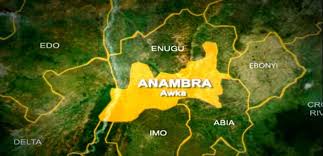
Anambra State Governor Chukwuma Soludo has declared a state of emergency on the environment, citing the growing threat posed by gully erosion, flooding and land degradation across the state.
Soludo made the declaration in a statewide broadcast in Awka to mark Anambra’s 35th anniversary, while launching a renewed Clean and Green Initiative designed to strengthen environmental protection through community participation.
The governor said his administration had recorded progress in tackling insecurity but identified environmental degradation as the state’s most serious long-term threat.
He said the scale of the problem had become too extensive for government to tackle alone, noting that human activities had intensified the effects of changing weather patterns and heavy rainfall.
Soludo described Anambra as the “gully erosion capital of Africa, if not the world”, saying more than 30 per cent of the state’s land area had been affected.
He said the cost of repairing the damage was beyond the state’s financial capacity, adding that even committing the entire state budget to ecological intervention would not be enough to address the crisis.
The governor listed Nanka, Oko, Amaokpala, Ozubulu, Ogidi and Nkpor, alongside parts of Onitsha and Nnewi, among areas affected by expanding gullies that have damaged homes, roads and farmlands.
According to Soludo, the environmental crisis has developed over about six decades, driven by blocked drainage systems, construction on waterways, uncontrolled runoff and soil excavation without adequate environmental assessments.
He also identified deforestation, farming on vulnerable slopes and indiscriminate sand mining as major contributors to land degradation.
While recognising efforts by previous administrations, Soludo said the state needed to move from a largely government-led response to a community-based approach involving households, institutions and local communities.
“We are moving from a reactive, government-dominated approach to a proactive, grassroots response.”
READ ALSO: First Lady Urges Nigerians to Embrace Environmental Responsibility
Under the new measures, all 179 communities in Anambra will be expected to carry out daily desilting of drainage channels. Obstructing waterways will be treated as an offence, while traditional institutions will assist with enforcement.
Households will also be required to maintain waste bins, control runoff from their properties and avoid building on waterways.
The state government plans to strengthen physical planning and environmental standards, while environmental education will be incorporated into civic education.
Soludo also encouraged residents to plant trees and report environmental violations under the campaign slogan, “If you see something, say something.”
Traditional rulers, town unions, religious organisations, schools, markets and other community groups will be involved in mobilising residents and supporting the new measures.
The declaration comes amid wider environmental challenges in Nigeria, including flooding, erosion, rapid urbanisation and inadequate drainage infrastructure. Across the Southeast, gully erosion continues to threaten communities, roads, farmland and other critical infrastructure.
Soludo’s announcement highlights the increasing difficulty of financing and managing environmental emergencies as degradation continues to affect livelihoods, infrastructure and economic activity.
In a separate anniversary message, the governor’s wife, Dr Nonye Soludo, described Anambra as a state known for resilience, enterprise, courage and culture.
She said the 35th anniversary should renew efforts to build an Anambra where children can pursue their aspirations, families can prosper and communities can look forward to a better future.
As Anambra enters its 36th year, Governor Soludo urged residents to treat environmental protection as a collective responsibility and work together to safeguard the state for future generations.
