
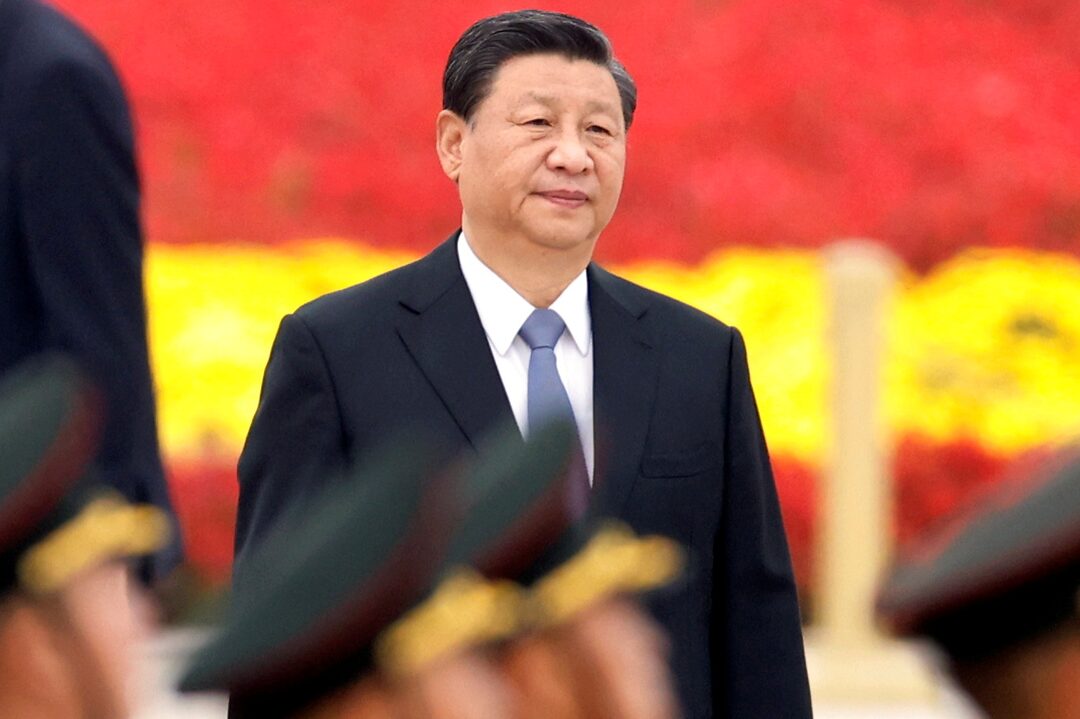
Chinese President Xi Jinping will conclude his three-day visit to South Korea on Saturday with a summit and state dinner hosted by President Lee Jae Myung, the newly elected leader who has pledged to balance Seoul’s relations with both Washington and Beijing.
Xi’s visit his first to South Korea in 11 years comes at a delicate time for President Lee, who took office in June following the removal of his predecessor after a failed attempt to impose martial law. Lee faces the challenge of defending South Korea’s export-driven economy while easing tensions with North Korea amid intensifying rivalry between the United States and China.
Earlier in the week, Lee hosted U.S. President Donald Trump for a brief state visit that culminated in a surprise trade deal, reducing U.S. tariffs in exchange for multibillion-dollar South Korean investments in the U.S. He is expected to hold similar high-level engagements with Xi on the sidelines of the Asia-Pacific Economic Cooperation (APEC) summit in Gyeongju.
Seoul, a key U.S. ally that hosts thousands of American troops, depends on the U.S. nuclear umbrella for defence against North Korea. Yet China remains its largest trading partner and wields significant influence over Pyongyang.
According to Lee’s office, discussions with Xi will focus on the denuclearisation of the Korean Peninsula, a term referring to efforts to curb North Korea’s nuclear weapons programme. Pyongyang dismissed the proposal on Saturday as an unrealistic “pipe dream.”
Also Read: Xi to Hold First Talks with Japan’s New Leader
Trump, during his visit, had expressed willingness to meet North Korean leader Kim Jong Un, though Pyongyang made no public response.
Xi met with Trump earlier in the week, reaching an agreement to lower U.S. tariffs on Chinese imports in return for China’s crackdown on illicit fentanyl production, the resumption of U.S. soybean imports, and continued rare earth exports. The Chinese leader also held bilateral meetings with the leaders of Japan, Canada, and Thailand.
In his closing remarks at the APEC summit, Xi proposed the creation of a World Artificial Intelligence Cooperation Organisation, while Lee called for regional collaboration on AI and demographic shifts. Member states later confirmed agreement on joint declarations covering these topics.
As the U.S. skipped this year’s APEC leaders’ summit, analysts said Beijing sought to position itself as a stable advocate for free trade — a role traditionally held by Washington. China will host next year’s APEC meeting in Shenzhen.
John Delury, a senior fellow at the Asia Society, said China’s engagement strategy toward U.S. allies like South Korea remains cautious. “We have not yet seen a major charm offensive. Beijing appears to be waiting while the Trump administration’s actions create their own disruptions,” he said.
Seoul has meanwhile urged China to ease restrictions on South Korean cultural exports imposed since the 2017 deployment of the U.S.-led THAAD missile defence system. It also called for the lifting of sanctions on South Korean firm Hanwha Ocean’s U.S.-linked units, which Beijing cited as security risks.
South Korea has additionally raised concerns over new Chinese structures in disputed waters, which Beijing insists are for fishing purposes.
Xi’s visit, observers say, underscores South Korea’s increasingly delicate position as it seeks to balance security commitments to Washington with economic and diplomatic engagement with Beijing.
