
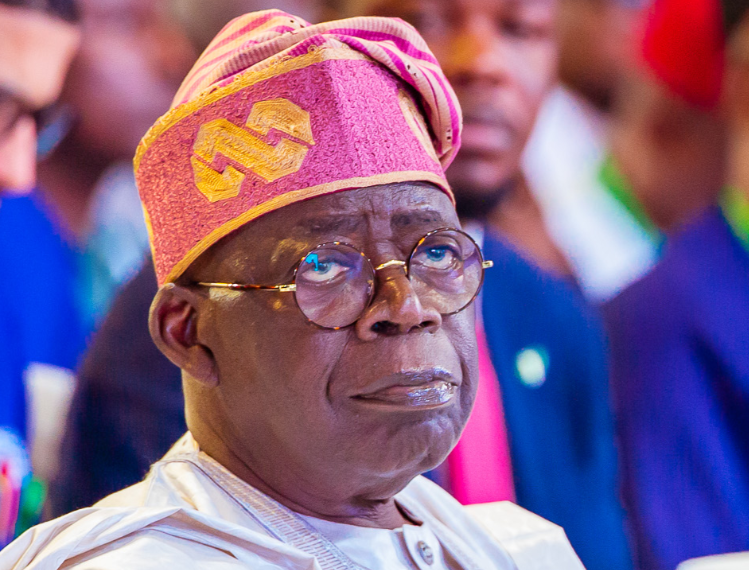
President Bola Ahmed Tinubu has pledged to deepen economic reforms and accelerate national development, saying his administration is entering a new phase focused on delivering prosperity and improving the living conditions of Nigerians.
In his Democracy Day address to the nation on friday June 12, the President said the government had made progress in stabilising the economy and was now concentrating on ensuring that growth translates into tangible benefits for citizens across all regions of the country.
According to him, the ultimate test of democracy lies not only in political freedoms but also in its ability to improve livelihoods, create opportunities and guarantee economic security for ordinary Nigerians.
President Tinubu noted that the country’s democratic journey has defied predictions of failure, arguing that Nigeria’s ethnic, religious and cultural diversity has become a source of strength rather than division.
READ MORE: President Bola Ahmed Tinubu’s 2026 Democracy Day Address
He urged citizens to uphold the ideals for which past democratic heroes fought, stressing that the present generation has a responsibility to secure economic advancement just as previous generations secured independence and democratic governance.
“As beneficiaries of their struggle, we have a duty to strengthen and deepen the democratic institutions for which they fought. The greatest tribute we can pay is to build a Nigeria where freedom is protected, justice is upheld, opportunity is expanded, and government is accountable.
“June 12, 1993, revealed the possibility of a true Nigerian nation. The heroes of June 12 secured political freedom. Our challenge is to secure economic freedom. Democracy must be felt in the quality of people’s lives—in opportunities for youth, in prosperous farmers, successful entrepreneurs, and the dignity of our workers.”
The President called on Nigerians to remain hopeful despite current economic difficulties, maintaining that resilience and unity would help the country overcome its challenges.
“27 years ago, many doubted democracy would survive here because of our diversity. Today, our diversity sustains our democracy.
“The road ahead is steep. But June 12 reminds us: Nigerians do not break. We bend, we bleed, but we do not break.
“Let us renew our covenant: That the labours of our heroes past shall never be in vain, and that government of the people, by the people, for the people, shall not perish from this land.”
Tinubu identified weak local government administration as one of the factors hindering national development and worsening insecurity, noting that meaningful progress requires stronger grassroots governance.
He said his administration’s reforms seek to ensure that governance reaches every community through improved local government autonomy and more effective service delivery.
“Recognising that democracy is undermined when people do not feel its impact, my administration has sought financial autonomy for our 774 local councils.
“A fundamental challenge to our nation’s advancement has been ineffective local government administration. The insecurity we are addressing is partly due to the collapse of grassroots governance. The Renewed Hope Agenda is about ensuring that all Nigerians benefit from governance.”
Defending recent economic policies, the President said the reforms were introduced to address long-standing structural weaknesses that had undermined investment, energy supply and economic productivity.
He pointed to improvements in the energy sector, including increased domestic refining capacity, electricity reforms and investments in rural electrification projects designed to expand access to power across underserved communities.
“By 2023, when we came on board, the electricity sector was characterised by chronic generation shortfalls, an unreliable gas supply, and transmission infrastructure so fragile that it could not evacuate available power. Distribution companies were burdened by massive losses and a metering deficit of over four million. Worst of all, the value chain was drowning in legacy debt.”
The President disclosed that the government is tackling the power sector’s metering deficit and legacy debt challenges while implementing the Electricity Act to give states greater responsibility in electricity generation and distribution.
He added that infrastructure investments, agricultural modernisation and export promotion initiatives were being pursued to stimulate economic growth, create jobs and strengthen food security.
According to him, the National Agricultural Development Fund has begun deploying thousands of tractors to boost farming productivity, while support for small and medium-sized enterprises is helping expand Nigeria’s export base.
President Tinubu noted that non-oil exports grew by 21 per cent over the past year, expressing confidence that ongoing reforms would strengthen economic growth and create broader opportunities for citizens.
