
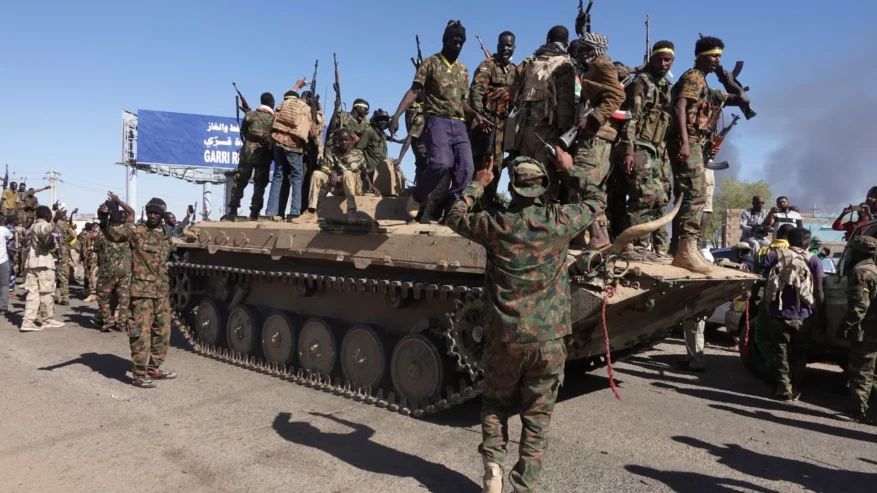
Sudan’s paramilitary Rapid Support Forces (RSF) said on Sunday it had seized the army’s headquarters in the city of al-Fashir, the Sudanese army’s last major stronghold in the western Darfur region, marking a major shift in the country’s protracted civil war.
Videos shared by the RSF showed fighters celebrating in front of signs for the army’s Sixth Infantry base. Reuters verified the location of the footage but could not confirm when it was filmed. The Sudanese army has yet to issue a statement regarding its position in the area.
Al-Fashir, the capital of North Darfur state, had been under an 18-month siege by the RSF, which has fought against the army and allied local militias. The group’s capture of the city, if confirmed, represents a significant victory that could consolidate its control over Darfur and accelerate the country’s effective division.
The fall of al-Fashir follows the RSF’s takeover of Bara in North Kordofan on Saturday — a city that forms a strategic buffer between Darfur and the army-controlled eastern territories, including the capital, Khartoum.
The siege of al-Fashir has been marked by extensive violence against civilians. Rights groups say the RSF has carried out frequent drone and artillery strikes, leading to widespread hunger among an estimated 250,000 residents trapped in the western part of the city.
Activists have long warned that an RSF takeover could trigger ethnic revenge attacks similar to those reported after the group captured the nearby Zamzam displacement camp. Communication with residents has been nearly impossible due to a prolonged telecom blackout, with many relying on Starlink connections to access the internet.
Last week, the RSF claimed it was facilitating the evacuation of civilians and surrendered soldiers, but those fleeing have reported robberies, kidnappings, sexual assaults and killings by RSF fighters along the escape routes.
Also Read: South Sudan President Reinstates Former Army Chief
A video shared by a senior official in the RSF-backed Tasis administration purportedly showed RSF soldiers escorting a convoy of people leaving al-Fashir, though Reuters could not verify the date or location.
A U.N.-mandated mission reported last month that the RSF had committed multiple crimes against humanity during the siege of al-Fashir, while the army has also been accused of war crimes.
Local resistance committees in al-Fashir said fighting was still ongoing in parts of the city and criticised army leadership for abandoning local fighters to resist the RSF alone. Drone footage released by the RSF showed crowds fleeing the city, though it was unclear whether they were civilians or combatants.
The conflict between the RSF and the Sudanese army erupted in April 2023 after tensions over integrating the two forces into a single national army during Sudan’s fragile democratic transition.
The war has displaced millions, left half the population facing hunger, and fuelled disease outbreaks across the country.
Over the weekend, the United States convened officials from the United Arab Emirates, Egypt and Saudi Arabia to explore a potential peace plan. Sudan’s foreign ministry confirmed its participation in bilateral talks in Washington, though the army-led Sovereign Council denied reports of any indirect negotiations with the RSF.
