
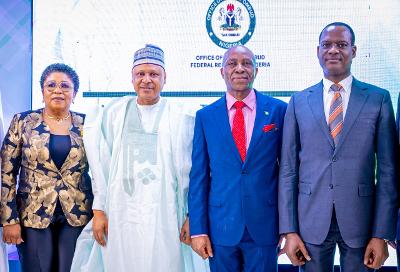
The Nigerian government has reiterated its commitment to building an accountable, transparent, and citizen-focused tax administrative system as part of President Tinubu’s Renewed Hope Agenda.
The Minister of Information and National Orientation, Mohammed Idris, made this declaration in Abuja during the unveiling of the official website and launch of the toll-free call centre of the Tax Ombud Office.
Describing the initiative as a significant milestone in Nigeria’s tax reform efforts, noting that the platforms would strengthen public trust, improve accessibility, and promote fairness within the nation’s tax administration framework.
“This is a major milestone in strengthening public trust, improving accessibility, and promoting fairness in Nigeria’s tax administration system. Effective communication and citizen engagement remain central to the success of ongoing economic reforms such as this,” Idris stated.
“Under the visionary leadership of His Excellency, President Bola Ahmed Tinubu, the Federal Government remains steadfast in its commitment to building a stronger, more resilient, and prosperous economy through bold and strategic reforms.
Idris noted that taxation remains critical to national growth, providing the financial resources required for investments in infrastructure, healthcare, education, transportation, and security.
“Tax administration cannot succeed on enforcement alone. It must be supported by public trust, transparency, fairness, and effective communication.”
According to him, the Tax Ombud Office serves as a bridge between taxpayers and tax authorities, offering Nigerians access to a fair and professional complaint-resolution mechanism.
He commended the introduction of the toll-free call centre and official website, describing them as important tools for eliminating communication barriers and improving access to tax-related information and services.
The minister further highlighted the importance of public enlightenment and civic education in promoting voluntary tax compliance and responsible citizenship.
“Tax education is not just about revenue generation; it is about building a culture of national participation and shared responsibility,” he noted.
He warned that misinformation and poor communication often undermine reform efforts and contribute to public distrust, calling for stronger collaboration among government institutions, the media, civil society organisations, and other stakeholders.
Idris also reaffirmed the commitment of the Federal Ministry of Information and National Orientation to supporting national sensitisation campaigns on tax reforms, taxpayers’ rights, and available complaint-resolution mechanisms.
He said clear and consistent communication would help Nigerians better understand the role of taxation in advancing the Renewed Hope Agenda and national development.
He commended the Tax Ombud Office on the successful launch of the platforms and urged stakeholders to continue working together towards building a tax administration system that is transparent, efficient, and responsive to citizens’ needs.
Stakeholders were urged to continue working together to build a tax administration system that is transparent, efficient, and responsive to the needs of Nigerians.
