
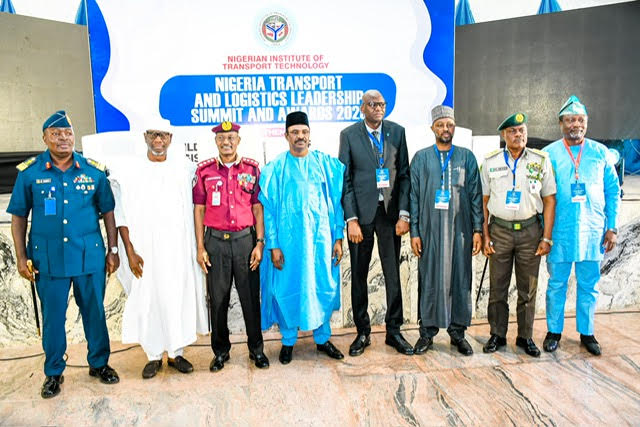
The Minister of Transportation, Senator Said Ahmed Alkali, has reiterated the Federal Government’s commitment to transforming Nigeria’s transport and logistics sector through digitisation, strategic investment, and strong stakeholder collaboration.
Speaking on Tuesday at the Nigerian Transport and Logistics Leadership Summit in Abuja, Alkali described transport and logistics as the “lifeblood of Nigeria’s economy,” stressing their crucial role in national growth and development.
The summit, themed “Building Sustainable Transport and Logistics Infrastructure in Nigeria: Current Trends and Future Insights,” was organised by the Nigerian Institute of Transport Technology (NITT) and brought together policymakers, industry leaders, and experts to discuss sustainable pathways for advancing the sector.
Alkali said that under President Bola Ahmed Tinubu’s Renewed Hope Agenda, key priorities include transforming the rail system, modernising pipeline infrastructure, and adopting digital innovations to enhance operational efficiency.
“Tangible progress is already being recorded across multiple fronts rail, road, and pipeline transportation with various innovations aimed at delivering efficient services in line with international best practices,” the Minister stated.
Also Read: Nigeria Commences Review of Lagos’ Blue Economy
He, however, noted that government efforts alone would not be sufficient, urging private sector players and development partners to invest and collaborate in driving sectoral transformation.
In his remarks, NITT Director-General, Dr Bayero Salih Farah, underscored the need for Nigeria to align with global trends, including sustainability, digital transformation, and the adoption of emerging technologies such as artificial intelligence and blockchain.
“The challenge before us is clear,” Farah said. “We must align with global best practices while developing home-grown solutions to our infrastructural, regulatory, and operational challenges.”
He added that addressing issues such as climate change, rapid urbanisation, and the increasing demand for mobility and trade would be critical to ensuring Nigeria’s long-term competitiveness in the global transport and logistics landscape.
