
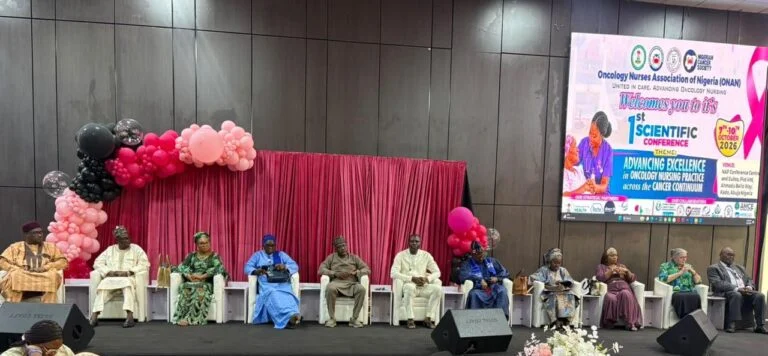
The Minister of State for Health and Social Welfare, Dr Iziaq Salako, has called for greater involvement of oncology nurses in health policy formulation and cancer care to improve treatment outcomes in Nigeria.
Salako made the call in Abuja at the opening of the first National Scientific Conference of the Oncology Nurses Association of Nigeria (ONAN), themed, “Advancing Excellence in Oncology Nursing Practice Across the Cancer Care Continuum.”
Represented by the National Coordinator, National Cancer Control and Nuclear Medicine Programme, Dr Uchechukwu Nwokwu, the minister said the complexity of cancer required effective collaboration among different health professionals, with nurses playing a critical role at all levels of care.
He said nurses should be actively involved in developing and implementing health policies, noting that they were strategically positioned across primary, secondary and tertiary healthcare facilities.
According to him, oncology nurses are particularly important at the primary healthcare level, where they contribute to cancer prevention, early detection, screening and prompt diagnosis.
Salako assured oncology nurses of the ministry’s commitment to strengthening their professional skills and ensuring their effective integration into the healthcare system.
The President of ONAN, Siraju Marafa, represented by the association’s Vice President, Joyce Asufi, said the conference was aimed at strengthening oncology nursing practice and improving cancer care nationwide.
READ ALSO: Nigeria Sets Up ₦50m Fund to Ease Cancer Treatment Costs
Marafa said oncology nurses played a central role throughout patients’ cancer journeys, from diagnosis and treatment to survivorship, palliative and end-of-life care.
He identified specialist training, early detection, access to treatment and workplace safety as major challenges facing oncology nursing in Nigeria.
Marafa also raised concerns about the occupational risks faced by nurses who handle cytotoxic drugs and work around radiation, calling for adequate protective equipment, safe handling procedures and regular health monitoring.
He urged the government to expand opportunities for specialist oncology nursing training within and outside Nigeria and introduce incentives to attract more nurses to the field.
The President of the Nigerian Cancer Society, Prof. Abidemi Omonisi, said the shortage of qualified oncology nurses remained a major challenge in the country.
Omonisi said some hospitals depended on nurses who volunteered or were assigned to cancer units rather than trained specialists, stressing that oncology nurses were essential members of multidisciplinary cancer care teams.
He encouraged more nurses, particularly students, to consider oncology nursing as a specialised career and take advantage of available training and mentorship opportunities.
A 25-year-old colon cancer survivor, Yemisi Daodu, highlighted the importance of oncology nurses in supporting patients through treatment.
Daodu said encouragement from an oncology nurse helped her remain confident and committed to completing her treatment.
She urged people to seek medical attention when they notice unusual symptoms, stressing the importance of early detection and treatment.
The conference brought together oncology nurses, cancer specialists, policymakers, survivors and other stakeholders to deliberate on strengthening cancer prevention, treatment and supportive care in Nigeria.
