
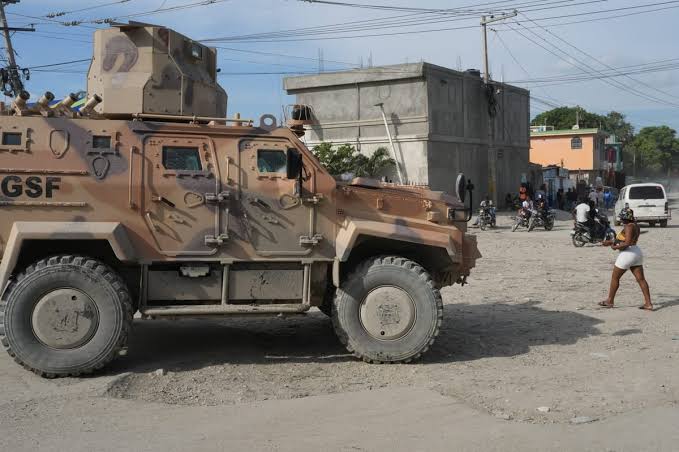
A police operation in Haiti has killed at least 34 suspected gang members in Martissant, south of the capital, Port-au-Prince, as security forces intensify efforts to tackle armed groups controlling large parts of the city and surrounding regions.
The Haitian National Police said no officers or civilians were injured during Thursday’s operation in the residential area, which forms part of the metropolitan region with a population of about three million.
Security operations against heavily armed gangs have escalated since Salvadoran troops were deployed to Haiti last month.
Although authorities have not disclosed the overall casualty figures, the United Nations estimates that more than 2,250 people, including over 300 civilians, were killed during security operations in the first nine months of this year.
The police released a video on social media showing a building collapsing beneath a large cloud of smoke. The footage was verified as having been filmed in Martissant through comparisons of road layouts, buildings and vegetation with satellite imagery.
READ ALSO: Hurricane Melissa Leaves 49 Dead, Billions in Damage Across Caribbean
Security analysts say the southwestern part of Martissant is under the influence of the Gran Ravine, Ti Bwa and 5 Segond gangs, which belong to the Viv Ansanm alliance, designated a terrorist organisation by the United States.
Police said Thursday’s operation was conducted alongside the government’s Task Force, which carries out operations using explosive drones with support from a private military contractor founded by Blackwater founder Erik Prince.
The police added that no Salvadoran personnel participated in the operation. El Salvador’s government had not immediately responded to a request for comment.
El Salvador’s President Nayib Bukele has published videos of security operations since deploying 2,000 troops to Haiti following the disappearance of four members of a United Nations-backed mission on October 18.
However, analysts have warned that anti-gang operations could endanger civilians if authorities fail to establish a long-term plan to maintain control of areas cleared of armed groups.
