
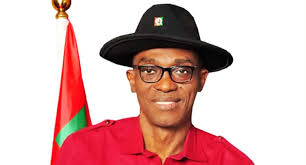
The leadership crisis within the Labour Party escalated on Monday as the Julius Abure-led National Working Committee firmly rejected reconciliation overtures by Abia State Governor, Dr Alex Otti.
The Abure faction maintained that the dispute over the party’s leadership remains unresolved, insisting that ongoing legal proceedings must run their full course. Party officials aligned with the group accused Governor Otti of playing a central role in triggering the crisis that has fractured the party.
In an interview, the Labour Party’s National Publicity Secretary, Obiora Ifoh, dismissed calls for reconciliation, arguing that the timing raised serious questions. He said the recent court ruling being celebrated by the opposing camp was only a judgment of a court of first instance and was already under appeal.
According to Ifoh, any attempt at reconciliation before the conclusion of the appeal process was premature. He added that the Abure camp viewed the current celebrations as short-lived, insisting that the final outcome would affirm what it described as the party’s legitimate leadership.
The firm response from the Abure faction underscores the depth of division within the Labour Party, despite recent legal developments and the decision of the Independent National Electoral Commission (INEC) to recognise the Nenadi Usman-led National Caretaker Committee.
The rejection followed comments by Governor Otti in Abuja, where he expressed regret over the departure of the party’s former presidential candidate, Peter Obi, describing it as a major loss. Otti made the remarks during a meeting with members of the party’s Board of Trustees, leaders of the caretaker committee, and representatives of organised labour, including the Nigeria Labour Congress and the Trade Union Congress.
The meeting came shortly after INEC updated its records to reflect the Nenadi Usman-led caretaker committee, a move the Abure faction has criticised as rushed and prejudicial.
Addressing party stakeholders, Otti said the new leadership was committed to reconciliation and rebuilding internal unity following its court victory. He disclosed plans to establish a reconciliation committee aimed at bringing back aggrieved members willing to abide by the party’s rules.
He also appealed directly to Abure and his supporters to return to the party, stressing that Labour remained open to all members prepared to work within its constitutional framework.
Beyond the leadership dispute, Otti announced that the party would not participate in the forthcoming Federal Capital Territory council elections and ruled out joining any opposition coalition ahead of the 2027 general elections, insisting that the Labour Party already represents a broad coalition of workers and progressive Nigerians.
Meanwhile, the Director-General of the party’s Directorate of Mobilisation and Integration, Marcel Ngogbehei, attributed the prolonged crisis to the actions of both Otti and Peter Obi. In a statement issued in Abuja, Ngogbehei argued that the caretaker committee arrangement had deepened divisions and multiplied legal battles within the party.
He also criticised Obi for failing to use his influence to mediate between the factions, warning that continued internal discord was weakening the opposition and creating political advantages for the ruling party ahead of the next general elections.
