
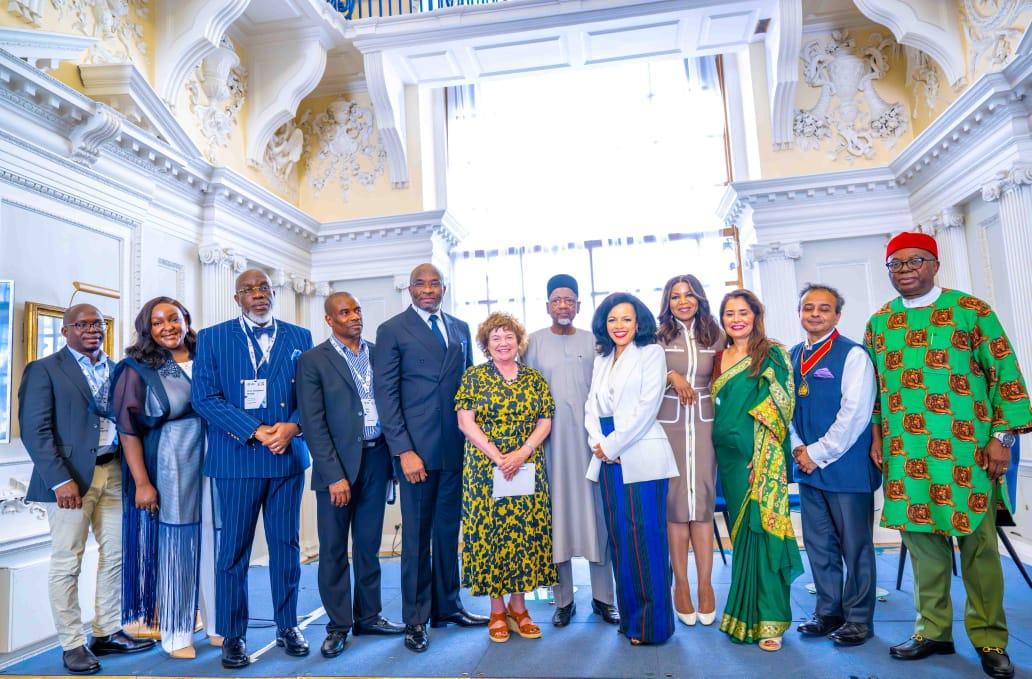
The Deputy Speaker of the House of Representatives, Mr Benjamin Okezie Kalu, has called on international investors to take advantage of Nigeria’s growing green economy, saying the country is well positioned to attract climate finance through ongoing economic reforms and a strengthened legal framework.
Speaking at the Nigeria Climate Investment Summit, held as part of London Climate Action Week under the theme “Catalyzing Nigeria’s Climate Policy Progress into Financial Flows for Green Projects”, Kalu said Nigeria is ready to translate its climate policies into viable investment opportunities capable of delivering sustainable economic growth.
He identified renewable energy, climate-smart agriculture, sustainable transport, resilient infrastructure and the circular economy as priority sectors with strong investment potential.
READ ALSO: Lagos, China to Partner on Technology, Blue economy
According to him, opportunities exist in distributed renewable energy, solar mini-grids, battery storage, electricity transmission and distribution, clean cooking technologies, industrial energy efficiency, climate-smart agriculture, irrigation, cold-chain logistics, food processing, electric mobility, green manufacturing, waste-to-value initiatives and climate adaptation projects.
Kalu said the country’s green development agenda must deliver benefits beyond environmental sustainability by expanding energy access, creating jobs, empowering young people, promoting women’s participation and ensuring inclusive development across all regions.
The Deputy Speaker also said the Federal Government’s economic reforms have created a more favourable investment environment, pointing to the removal of fuel subsidy, increased government revenue and reforms in the foreign exchange market as measures that have improved investor confidence.
He added that legislative reforms introduced by the 10th National Assembly, particularly the Climate Change Act and the Electricity Act, have strengthened the regulatory environment for climate investment.
According to him, the Climate Change Act establishes a framework for climate governance, emissions reporting and market-based mechanisms, while the Electricity Act encourages decentralisation and greater private-sector participation in electricity generation and distribution, creating new opportunities for states to attract green investments.
Kalu further pledged the National Assembly’s support for stronger implementation of climate legislation, improved investor protection, enhanced oversight of climate expenditure and the development of carbon market and green finance frameworks.
He urged international investors, development finance institutions, pension funds, insurers, commercial banks and philanthropic organisations to collaborate with Nigerian institutions in financing climate projects.
The Deputy Speaker also advocated blended finance, political risk insurance, green guarantees, first-loss facilities and local-currency financing as measures to reduce investment risks and lower the cost of capital for environmentally sustainable projects.
To strengthen collaboration between Nigeria and the international investment community, Kalu proposed the establishment of a Nigeria–London Green Finance Partnership to develop a pipeline of investment-ready projects and provide technical support that would accelerate their implementation.
“Nigeria is therefore inviting international investors, pension funds, insurers, green asset managers, banks, development finance institutions, and philanthropic capital to work with Nigerian financial institutions and public authorities to develop innovative financing structures.
“We require blended-finance models that combine public, private and concessional capital. We require green guarantees, first-loss facilities, political risk insurance, local-currency financing, project preparation support, and credit enhancement instruments that can reduce the cost of capital for viable green projects.
“Nigeria is ready to work with GLOBE International, the City of London, SOStainability, Sustainable Energy for All, the United Nations system and global financial institutions to ensure that our green taxonomy, reporting standards and project-preparation systems are increasingly aligned with international expectations.
“Our objective is straightforward: every pound sterling, dollar, naira or euro invested in Nigeria’s green economy should produce measurable value.
“Today, I propose that this summit should not end as another important conversation. It should become the beginning of a structured Nigeria–London Green Finance Partnership. This is how ambition becomes action. This is how policy becomes finance. And this is how finance becomes infrastructure, jobs, resilience and shared prosperity,” Kalu added.
