
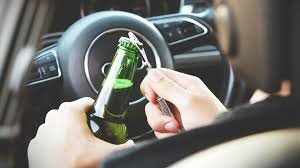
Australian researchers have developed artificial intelligence (AI) technology that could change how drunk and dangerous drivers are identified, offering a non-invasive alternative to traditional breathalyzers.
Using 3D facial analysis, researchers were able to detect three major causes of road accidents simultaneously: blood alcohol concentration, fatigue, and expressions such as anger, said a statement from Australia’s Edith Cowan University (ECU) on Wednesday.
The system, developed by ECU researchers, uses a single deep learning model to identify blood alcohol concentration with nearly 90 per cent accuracy and drowsiness with 95 per cent accuracy, the statement said.
It said that the technology can also determine the level of intoxication, classifying alcohol impairment into three categories such as sober, moderate and severe.
Lead researcher, ECU PhD candidate Abdullah Tariq, said the system automatically captures diverse facial dynamics, including eye blinking, subtle facial movements, and progressive facial feature changes that are critical for distinguishing between different states.
The researchers said unlike breathalyzers, the method allows continuous, real-time monitoring without driver cooperation.
