
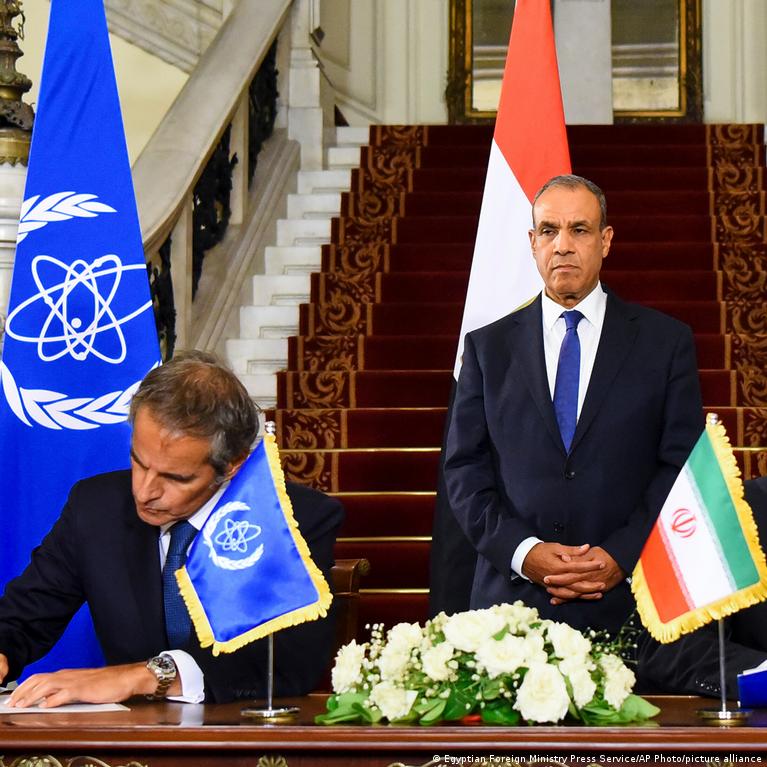
The United Nations nuclear watchdog has welcomed the interim peace agreement signed between the United States and Iran, saying it is ready to participate in technical discussions aimed at implementing the deal.
The Director General of the International Atomic Energy Agency (IAEA), Rafael Grossi, made this known on Thursday while speaking to reporters in Geneva, describing the agreement as an important step toward structured dialogue.
“It is good that the memorandum is there. Now the technical work starts,” Grossi said.
READ ALSO: Peace Talks Stall as US–Iran Conflict Drags On
He explained that the next phase would involve detailed consultations between the agency and both Washington and Tehran to define practical steps for carrying out the provisions of the agreement.
“Now it is for us to sit down with our American and Iranian colleagues and start formulating concrete steps that will have to be taken,” he added.
The 14-point agreement, signed on Wednesday, extends a ceasefire first announced in April by another 60 days, including in Lebanon, in order to allow both sides to work toward a comprehensive truce.
The memorandum was digitally signed by U.S. President Donald Trump and Iranian President Masoud Pezeshkian in English and Farsi, with Iran’s foreign ministry stating that the agreement took effect immediately upon signing.
Grossi noted that the involvement of the IAEA in monitoring the process was crucial, especially in defining inspection requirements and access mechanisms.
“The fact that they are mentioning that this will be under the supervision and control of the IAEA is very important, because in our conversation, what we are going to be doing is defining what we need to see, what we need to access,” he said.
He added that the scope of the agency’s role would depend on the final terms of the agreement, as technical talks would focus on translating broad principles into actionable measures.
Grossi also recalled earlier failed negotiations between the United States and Iran in Geneva in February, which did not yield a breakthrough, although some progress was reportedly made before military strikes later escalated tensions into wider conflict.
He urged all parties not to dwell on past setbacks, stressing the importance of moving forward.
“We have a chance and we need to seize it,” he said.
