
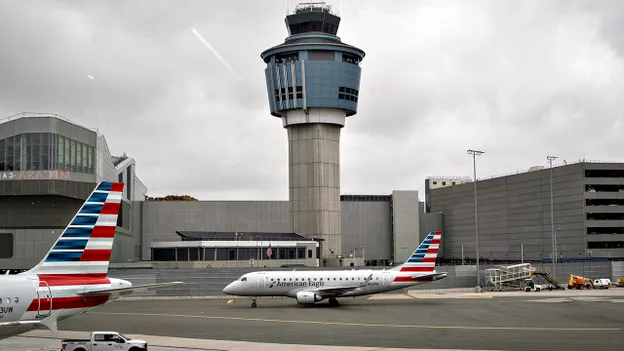
Airlines cancelled about 1,200 flights on Tuesday as air traffic control staffing levels showed significant improvement ahead of a possible end to the record-setting 42-day U.S. government shutdown, expected as soon as Wednesday.
The latest cancellations marked a sharp decline from Monday, when 2,400 flights were cancelled and 9,600 delayed across the country. On Tuesday, airlines reported just 1,700 delays the best performance for the industry in several days.
Last week, the Federal Aviation Administration (FAA) directed airlines to cut 4% of daily flights at 40 major airports starting Friday, 7 November, due to widespread air traffic control staffing shortages. The reductions increased to 6% on Tuesday and were projected to rise to 8% on Thursday and 10% by Friday, 14 November.
However, with more controllers returning to work, officials said the situation is improving. Transportation Secretary Sean Duffy told reporters at Chicago O’Hare Airport that only four staffing issues were reported on Tuesday, down from 81 on Saturday.
“When that data changes, we’re going to start taking that down from 6% maybe we’ll go to four, two, and get back to normal air travel,” Duffy said. “It depends on controllers coming back to work.”
The FAA and major airlines, including United Airlines, which has cut about 5% of Thursday flights, are in discussions over how soon the restrictions can be eased or eliminated.
On Monday night, the U.S. Senate approved a bill to end the shutdown and fund the government through 30 January, with the House of Representatives expected to vote on it Wednesday.
Duffy warned that if the House fails to pass the measure, the situation could worsen. “If the House does not approve this bill, flight disruptions could skyrocket this weekend and some major airlines might not keep flying,” he cautioned.
The prolonged shutdown, the longest in U.S. history, began on 1 October and has forced about 13,000 air traffic controllers and 50,000 Transportation Security Administration (TSA) agents to work without pay. The FAA is currently short of 3,500 controllers compared to targeted staffing levels, many of whom have been working extended hours and six-day weeks.
Over the past weekend alone, more than 1.2 million passengers experienced delays or cancellations due to the staffing crisis.
