
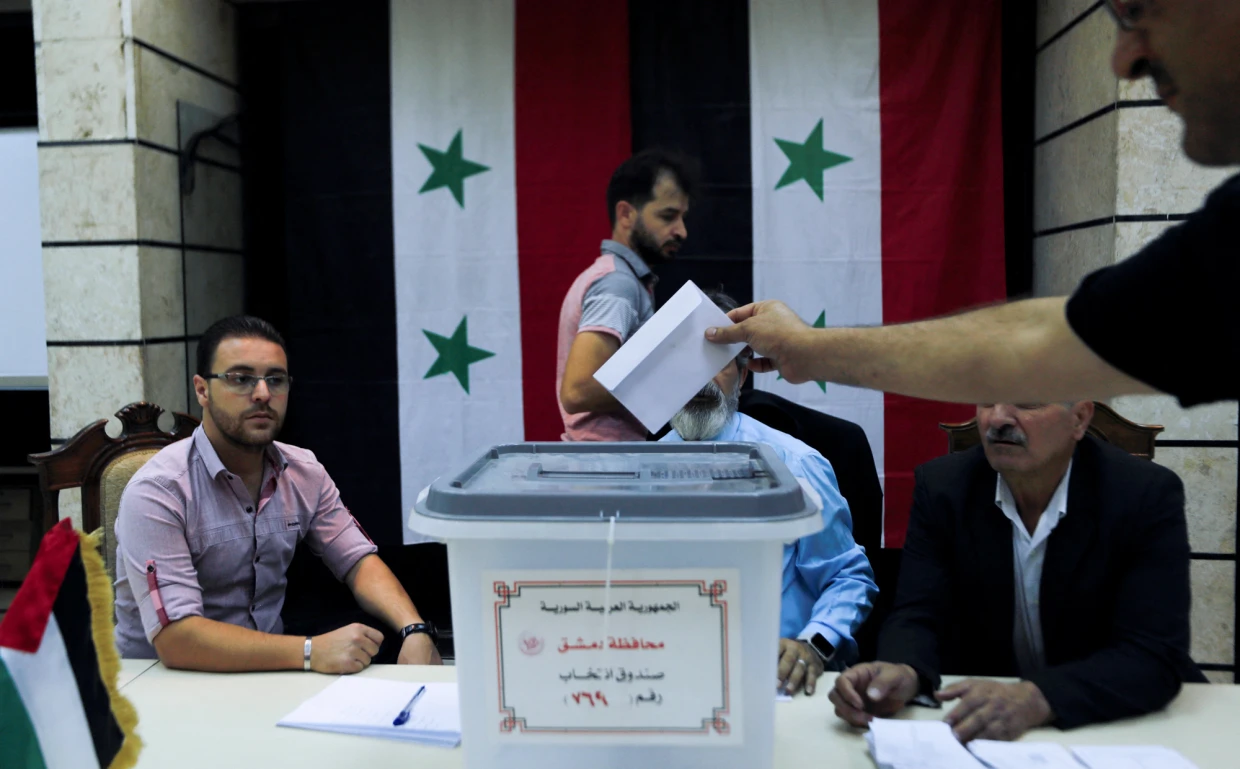
Syria will hold its first parliamentary election since the overthrow of Bashar al-Assad on Sunday, a landmark step in the country’s political transition, but one that has raised questions about inclusivity and representation.
The election, described as indirect, will see 6,000 regional electors select two-thirds of the 210-seat legislature, while President Ahmed al-Sharaa a former Al Qaeda fighter whose forces toppled Assad in December will appoint the remaining third.
Authorities say the process was adopted due to unreliable population data and the displacement of millions during 14 years of conflict. However, polls will not be held in areas controlled by Kurdish-led authorities in the northeast and in the Druze-held province of Sweida, leaving 19 seats vacant.
Sharaa has sought to consolidate his leadership in a nation fractured by war and sectarian strife. His government insists the parliamentary process is a step towards rebuilding state institutions.
But critics argue that the limited and centralised system undermines the democratic process. In the divided eastern city of Deir al-Zor, residents expressed frustration that only the government-held side would participate.
“It does not satisfy me that there are elections there, and here there aren’t. We want something that serves the whole region. Syria is united,” said Hassan Mohamed Dalli, who lives on the Kurdish-controlled eastern bank.
Concerns have also been raised over the participation of women and minorities. Women account for at least 20 percent of candidates in just a quarter of electoral districts, while in half of the districts they make up less than 10 percent. No quotas have been established for women or minority lawmakers.
Under the Assad regime, women fared little better. Data from the Inter-Parliamentary Union shows that female lawmakers made up between 6 and 13 percent of parliament from 1981 until Assad’s fall, with no quotas in place.
Also Read: Trump Threatens Higher Tariffs on India Over Russian Oil Imports
Analysts warn that the current winner-takes-all system could produce a legislature dominated by Sunni Muslim men. They argue that inclusivity will largely depend on Sharaa’s use of his power to appoint one-third of the parliament.
“If the president selects individuals subject to his influence, he could issue laws through decrees without effective challenge,” said Haid Haid, senior fellow at the Arab Reform Initiative. “This moment could either legitimise a fragile transition or deepen long-standing public cynicism.”
Despite the criticism, supporters of the new administration insist that the election represents a break with Assad’s decades of authoritarian rule, when his Baath party controlled two-thirds of the assembly’s 250 seats.
The last elections under Assad, held in July 2024, were dismissed by opponents .
