
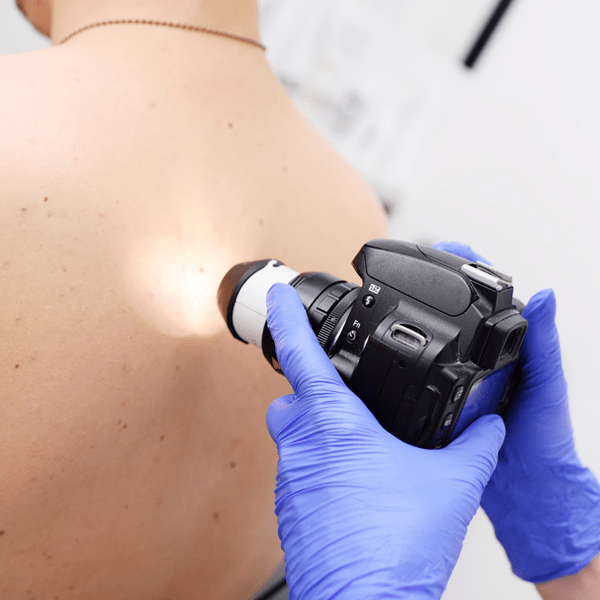
A researcher at a Scottish university has developed AI tools that could give people in remote parts of the world access to fast and potentially life-saving skin cancer diagnoses.
Tess Watt, a PhD student at Heriot-Watt University in Edinburgh who led the project, said the technology is designed to enable early detection of skin conditions anywhere in the world without requiring direct access to dermatologists.
The technology also functions without internet connectivity.
The system works by allowing a patient to take a photograph of a skin concern using a small camera attached to a Raspberry Pi device a low-cost, energy-efficient handheld computer capable of storing vast amounts of information.
The image is analysed in real-time using advanced image classification, comparing it to a large dataset of thousands of images stored on the device to arrive at a diagnosis.
The results are then shared with a local GP service to initiate a suitable treatment plan.
The project is believed to be the first of its kind to combine AI medical diagnostics with the goal of serving remote communities.
Watt explained: “Healthcare from home is a really important topic at the moment, especially as GP wait times continue to grow.
“If we can empower people to monitor skin conditions from their own homes using AI, we can dramatically reduce delays in diagnosis.”
A prototype of the device has already been demonstrated at Heriot-Watt’s advanced health and care technologies suite.
The research team said the tool is currently up to 85% accurate in its diagnostic capabilities, but they hope to improve this figure by expanding their access to skin lesion datasets, supported by advanced machine learning tools.
Watt is also in discussions with NHS Scotland to begin the ethical approval process for testing the technology in clinical settings.
“Hopefully, in the next year or two, we’ll have a pilot project under way,” she said, noting that medical technologies often take several years to progress from prototype to practical use.
She added: “By the time I finish my PhD, three years from now, I’d love to see something well into the pipeline that’s on its way to real-world application.”
The university stated that the long-term goal is to launch the system in remote areas of Scotland first, before expanding to global regions with limited access to dermatological care.
Also Read: Global Health Security Consortium Elects New Board Secretary
It also noted that the technology could benefit patients who are infirm or unable to travel, allowing family members to assist with capturing and submitting diagnostic images to healthcare providers.
Watt’s academic supervisor, Dr Christos Chrysoulas, said:
“E-health devices must be engineered to operate independently of external connectivity to ensure continuity of patient service and safety.
“In the event of a network or cloud service failure, such devices must fail safely and maintain all essential clinical operations without functional degradation.
“While auxiliary or non-critical features may become temporarily unavailable, the core diagnostic and even therapeutic capabilities must remain fully operational, in compliance with safety and regulatory standards.
“Ensuring this level of resilience in affordable, low-cost medical devices is central to our research, particularly for deployment in resource-limited settings and areas with no connectivity, where uninterrupted patient care must still be guaranteed.”
UK Science and Technology Secretary, Peter Kyle, commented on the research:
“Low-cost technology which could help detect skin cancer early and at home without even the need for internet access is an incredible example of AI’s potential to break down barriers in healthcare and save lives.
“Promising, first-of-its-kind research like this also shows the crucial role UK innovators can play in improving lives across all communities and underscores the importance of government investment in research to deliver our plan for change.”
