
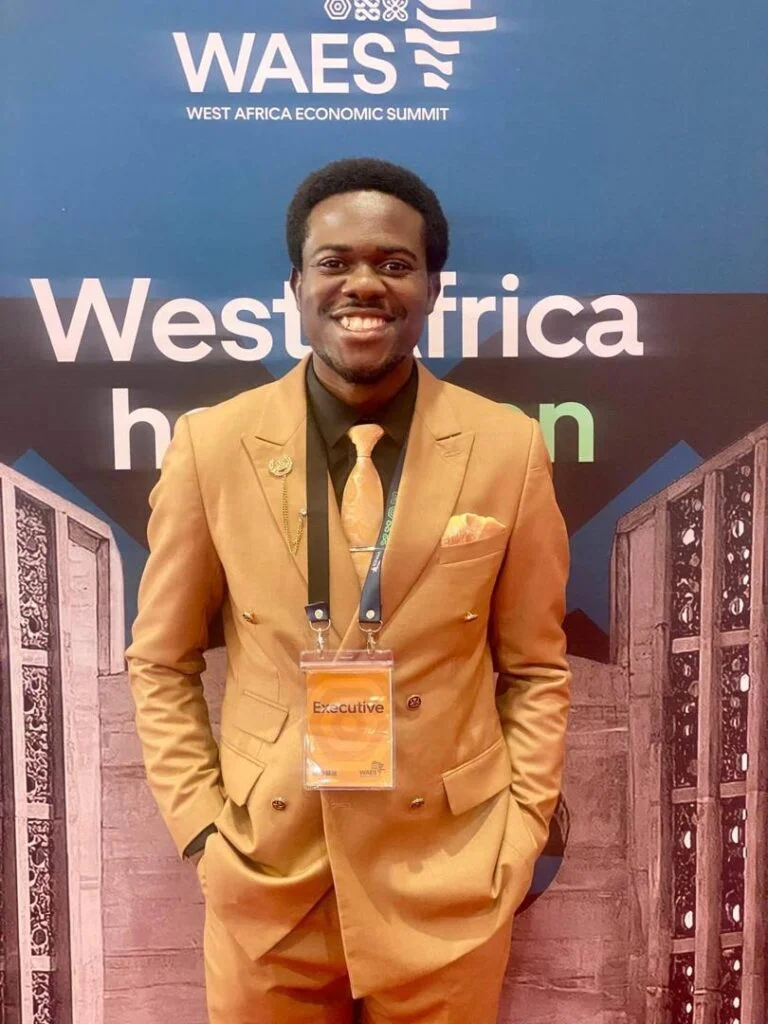
Mr. Nehemiah David, a Nigerian scholar and First Class Honours graduate in French Education from the University of Benin, has said he is championing the integration of Artificial Intelligence (AI) and humans for global language solutions.
According to him, he is among a growing cohort of African professionals shaping the future of translation and interpretation in the digital age.
“As AI transforms global communication, I am advocating for a model that prioritises human insight alongside technological advancement.
Machines can translate the sentence, but only humans can translate the soul of the message,” he said.
David noted that he combines academic excellence with practical field experience.
Looking ahead, he views translation not merely as a technical service, but as foundational to global cooperation.
“In the coming decade, translation won’t just support development it will drive it.
It will become essential infrastructure for public policy, international business, and inclusive education,” he said.
With over a decade in language services, David’s contributions span translation, interpretation, and education across national and international sectors.
“From interpreting at African Union summits and environmental policy forums to mentoring French language learners across Nigeria, my approach bridges linguistic precision with cultural understanding,” he said.
He stated that his research has attracted interest from AI think tanks, language education networks, and ethics panels across Francophone West Africa.
Translation is not merely a service; it is a responsibility.
Done right, it fosters understanding; mishandled, it risks deepening divides,” he said.
David proposed an integrated model in which AI serves as a tool guided by human interpreters.
“Citing examples such as Microsoft’s multilingual meeting platforms and robotic interpreters in Japanese airports AI should be the engine, and humans the pilot,” he said.
Also Read: Kenya to Host Landmark AI Tech Summit
He encouraged the adoption of blended systems that retain the speed of machines while preserving the depth of human expression.
His recommendations include national frameworks to train interpreters in AI post-editing, curriculum redesign to embed AI into tertiary language programmes, and collaboration among technologists, linguists, and policy stakeholders.
David also called on the Nigerian Institute of Translators and Interpreters (NITI) to lead these reforms at scale.
“As founder of Neboda Education Hub and president of the Community of French-Speaking Champions Initiative (CSI-COFSCI), I have trained hundreds of students in bilingual education, AI-enhanced language tools, and interpretation ethics,” he said.
He noted that his efforts aim to professionalise the language industry while expanding access and opportunities for emerging talent.
David’s leadership has earned him several honours, including Most Outstanding Scholar of the Year and an honorary doctorate in International Affairs from a UK-based institution.
