

As part of efforts to strengthen Nigeria’s healthcare system, the Nigerian Government has restated its commitment to promoting local participation in the production and deployment of diagnostic technologies.
Minister of State for Health and Social Welfare, Dr Iziaq Adekunle Salako, made this known while delivering a keynote address at the 2026 National Summit on Diagnostics in Abuja. The summit was themed “Strengthening Partnerships and Local Content for Integrated Diagnostics.”
Dr Salako described diagnostics as a critical pillar of modern healthcare, noting that improving diagnostic capacity is essential for enhancing the effectiveness and credibility of Nigeria’s health system.
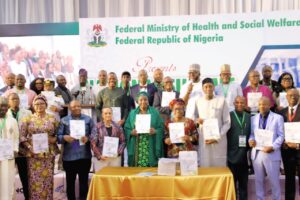
Represented at the event by the Permanent Secretary of the Federal Ministry of Health and Social Welfare, Daju Kachollom, the minister said timely and accurate diagnosis plays a vital role in disease prevention, early detection, treatment, and patient monitoring.
He noted that a large proportion of medical decisions worldwide rely on diagnostic results, stressing the need for Nigeria to build a more resilient and sustainable diagnostic system capable of delivering better health outcomes.
Also Read: Nigeria Unveils Care365 Health Hub to Drive Universal Health Coverage
According to him, strengthening the country’s diagnostic services requires more than infrastructure, pointing out the importance of strong governance, skilled personnel, efficient laboratory networks, and effective regulatory oversight.
Dr Salako also highlighted the government’s plan to expand local content in the health sector, particularly in the manufacturing, distribution and maintenance of diagnostic equipment and in-vitro diagnostic products.
He said investing in local innovation and domestic production would enhance national health security while also boosting economic growth and creating employment opportunities.
The minister added that improving diagnostic services forms part of the Renewed Hope Agenda of President Bola Ahmed Tinubu, which prioritises the transformation of Nigeria’s health sector.
He further assured stakeholders that the ministry would continue to implement policies aimed at strengthening laboratory services across the country, including the periodic review of the National Essential Diagnostics List.
Dr Salako emphasised that stronger collaboration among government agencies, development partners, research institutions, professional bodies and the private sector is necessary to build a sustainable diagnostic ecosystem.
He also announced that the National Summit on Diagnostics would be institutionalised as an annual platform to encourage partnerships, support local content development and promote integrated diagnostic services nationwide.
