
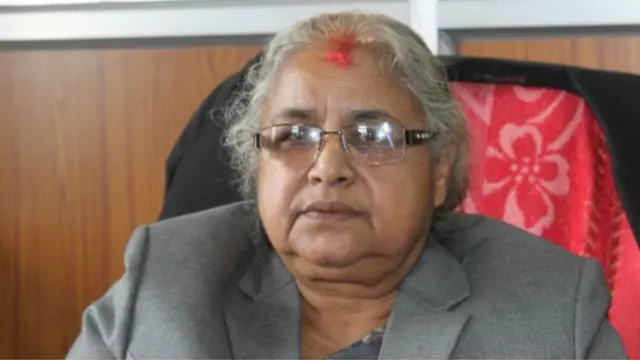
Nepal’s “Gen Z” protesters on Thursday backed the country’s first female chief justice, Sushila Karki, to temporarily lead the nation, while calling for the dissolution of parliament in the wake of violent demonstrations that forced Prime Minister K.P. Sharma Oli to resign.
Karki, 73, who made history in 2016 as Nepal’s first woman chief justice and is now retired, has emerged as the frontrunner to become interim leader of the crisis-hit Himalayan nation. Protest representatives confirmed her name had been proposed to President Ramchandra Paudel and the army.
“We will dissolve the parliament. We are not trying to dissolve the constitution,” protest leader Ojaswi Raj Thapa told reporters. “We may need some changes to the constitution but we don’t want to dissolve the constitution.”
The protests, widely dubbed the “Gen Z” movement due to the participation of mainly young people in their teens and early 20s, have plunged Nepal into its worst upheaval in years. Nineteen demonstrators were killed in clashes with security forces on Monday, prompting Oli’s resignation the following day. The health ministry said the death toll has since climbed to 34, with more than 1,300 injured.
On Thursday, soldiers patrolled the streets of Kathmandu as shops, schools, and colleges remained shut, though some essential services had resumed. Curfews in the capital and surrounding areas remained in place.
Karki has signalled her willingness to serve as interim leader, but officials are seeking a constitutional route for her appointment. Local media reported she held talks with President Paudel and army chief Ashok Raj Sigdel.
In a statement, President Paudel said he was making “every effort to resolve the current difficult situation within the constitutional framework and to protect democracy and maintain peace and order.”
Supporters praised Karki as a candidate capable of restoring stability. “We see Sushila Karki for who she truly is honest, fearless, and unshaken,” said Sujit Kumar Jha, a 34-year-old company secretary.
Also Read: Nepal Prime Minister K.P. Sharma Oli Resigns
However, sources noted protesters were still seeking consensus, and not all backed her candidacy. Karki herself has not spoken publicly, and the army has yet to confirm its position.
The protests began after the government banned social media platforms a decision later revoked but quickly grew into wider demonstrations against corruption and poor economic opportunities. Demonstrators torched government buildings, including the Supreme Court, ministers’ homes, and Oli’s private residence.
The army has urged patience as talks continue. “Initial talks are on and will continue today,” spokesperson Raja Ram Basnet said. “We are trying to normalise the situation slowly.”
