
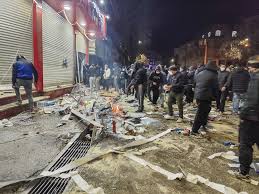
Iran was largely isolated from the outside world on Friday as authorities shut down internet access to curb widespread protests. Phone calls to the country were largely unsuccessful, several flights were cancelled, and Iranian news websites were updating intermittently.
Supreme Leader Ayatollah Ali Khamenei accused protesters of acting on behalf of U.S. President Donald Trump, warning that Tehran would not tolerate citizens acting as “mercenaries for foreigners” while condemning attacks on public property.
The unrest, initially sparked by soaring inflation, has spread across the country, leaving dozens reportedly dead. While the protests have not reached the scale of the upheaval seen three years ago, authorities are increasingly vulnerable amid a dire economy and the lingering effects of last year’s conflict with Israel and the United States.
In Zahedan, home to the Baluch minority, an Iranian rights group, Hengaw, reported that a protest march following Friday prayers was met with gunfire, wounding several participants. The country’s fragmented external opposition factions called for continued demonstrations, with Reza Pahlavi, exiled son of the late shah, urging citizens via social media to “take to the streets.”
Also Read: At Least 25 Killed In Iran Protests
Images from state television showed burning buses, cars, motorbikes, metro stations, and banks. Authorities blamed the unrest on the People’s Mujahedin Organisation (MKO), an opposition group that split from the government after the 1979 Islamic Revolution. In Rasht, a state TV journalist described streets littered with destroyed shops, saying the area “looks like a war zone.”
Videos verified by Reuters showed hundreds marching in Tehran, with some chanting slogans such as “Death to Khamenei.”
While Iran has historically quelled larger bouts of unrest, the country now faces a worsening economic crisis, compounded by renewed international sanctions over its disputed nuclear programme.
Authorities have adopted a dual approach, recognising legitimate economic grievances while cracking down on what they describe as violent rioters. Parliament Speaker Mohammad Baqer Qalibaf acknowledged that protesters’ voices must be heard, but warned that cases linked to “foreign spy networks” would be treated differently.
In a firmer address on Friday, Supreme Leader Khamenei stated: “The Islamic Republic came to power through the blood of hundreds of thousands of honourable people. It will not back down in the face of vandals,” accusing protesters of seeking to appease Trump.
What began as economic protests, including the collapse of the rial and inflation topping 40% in December, has evolved into demonstrations against the authorities, with slogans praising the former monarchy and calling for the removal of current leaders. Most demonstrators observed in videos were young men, though the true level of support for the monarchy or MKO inside Iran remains unclear.
In addition to the internet blackout, at least six flights between Dubai and Iranian cities scheduled for Friday were cancelled, further isolating the country from international communication and travel.
