
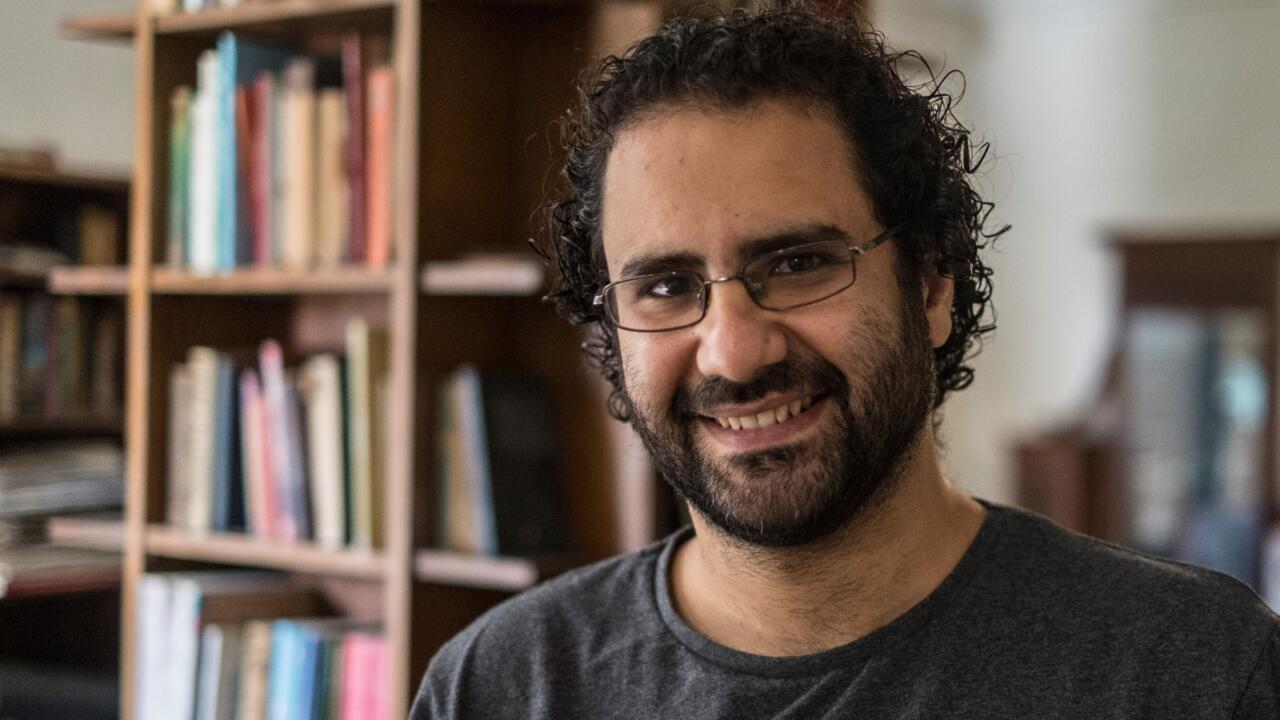
High-profile Egyptian-British activist Alaa Abd el-Fattah was released on Tuesday, a day after President Abdel Fattah al-Sisi pardoned him and five other prisoners.
Abd el-Fattah, 43, widely seen as Egypt’s most prominent political prisoner, spent much of his adult life in and out of detention over his activism and had become a rare symbol of opposition to Sisi’s crackdown on dissent. His lengthy imprisonment and repeated hunger strikes drew widespread international appeals for his release.
“I can’t even describe what I feel,” his mother, Laila Soueif, said from her home in Giza, surrounded by family and friends. “We’re happy, of course. But our greatest joy will come when there are no political prisoners in Egypt.”
Soueif and Abd el-Fattah’s sister Sanaa had been waiting outside Wadi al-Natroun prison, about 100 kilometres northwest of Cairo, on Monday in anticipation of his release.
Despite international campaigns, including during the COP27 climate summit hosted by Egypt in 2022, hopes for his freedom were only revived when Sisi in September instructed authorities to consider a pardon. Abd el-Fattah’s name had earlier been removed from Egypt’s “terrorism” list.
UK Welcomes Release
Abd el-Fattah, who obtained British citizenship in 2021 through his mother, comes from a family of well-known activists and intellectuals. His mother met British Prime Minister Keir Starmer earlier this year to press for his release.
“I strongly welcome the news that Alaa Abd el-Fattah has received a presidential pardon,” British Foreign Minister Yvette Cooper said. “I’m grateful to President Sisi for this decision. We look forward to Alaa being able to return to the UK, to be reunited with his family.”
Also Read: Turkey, Egypt Condemn Israel’s Gaza Control Plan
Egypt’s National Council for Human Rights, a state-funded body, also welcomed the pardon, saying it reflected a stronger emphasis on swift justice.
Years of Imprisonment
Abd el-Fattah had been detained at various times, including before the 2011 Arab Spring uprising that toppled autocrat Hosni Mubarak. But his harshest sentences came after Sisi, then army chief, rose to power.
In 2014, he was handed a 15-year prison term for protesting without permission, later reduced to five years. Arrested again in 2019 on charges of spreading false news, he was sentenced to another five years.
In recent years, Abd el-Fattah and his mother both resorted to hunger strikes to demand his release. His mother’s strike in Britain in late 2024 ended only after pleas from family as her health worsened. Abd el-Fattah also staged multiple hunger strikes in prison, most recently earlier this month.
