
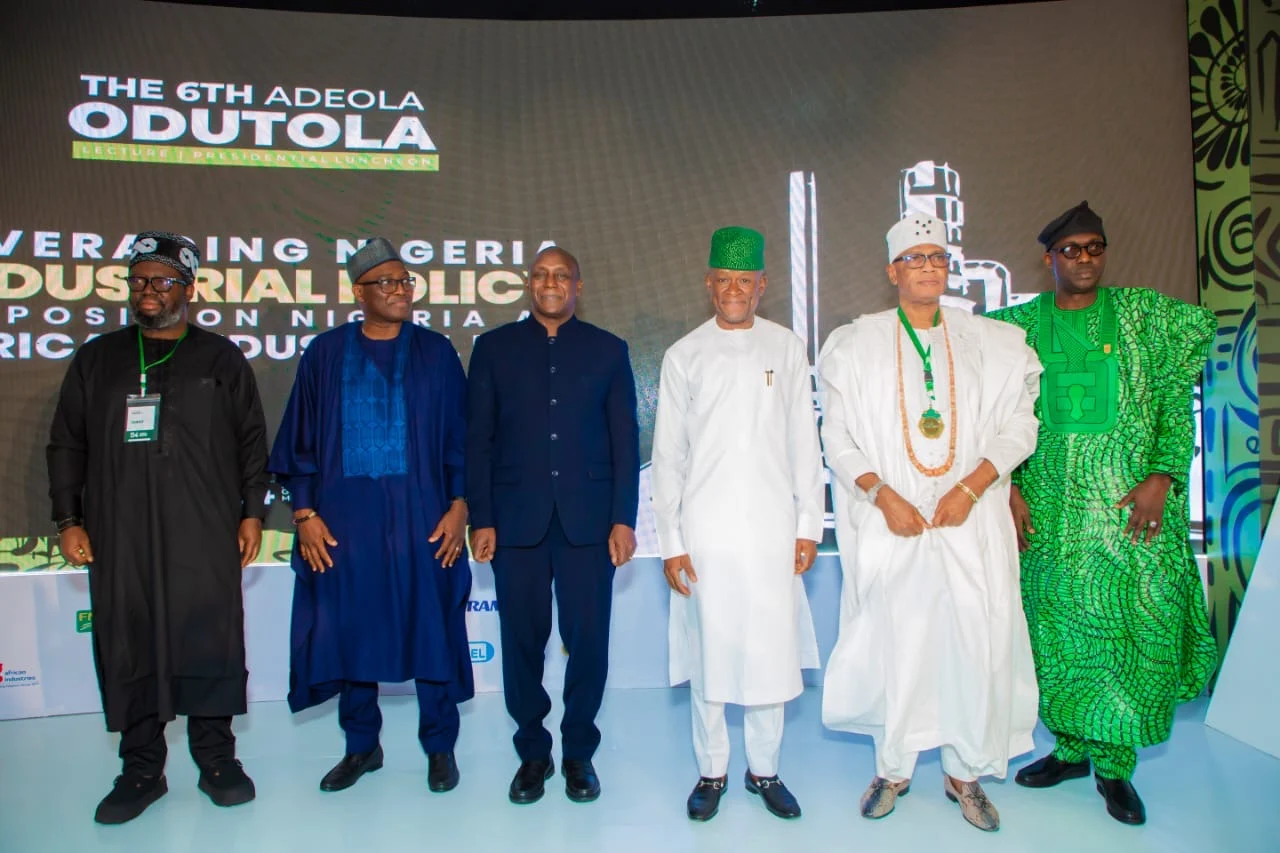
President Bola Tinubu has reaffirmed the Federal Government’s commitment to implementing the Nigeria Industrial Policy (NIP), saying its success will be judged by tangible improvements in manufacturing and industrial output.
Tinubu gave the assurance on Tuesday in Lagos at the sixth Adeola Odutola Lecture and 54th Annual General Meeting of the Manufacturers Association of Nigeria (MAN).
Represented by the Minister of State for Industry, Sen. John Enoh, the President said the NIP had been designed with a clear delivery framework to ensure measurable progress in the industrial sector.
The event was themed: “Leveraging National Industrial Policy to Position Nigeria as Africa’s Industrial Hub.”
Tinubu said the implementation of the policy would be assessed through indicators including the reopening of factories, higher capacity utilisation, jobs created, exports, and the establishment of new manufacturing plants.
He directed the Ministry of Industry, Trade and Investment, through the Industrial Revolution Working Group (IRWG), to hold quarterly delivery meetings with MAN to review progress and strengthen accountability.
“That is why this policy is not a shelf document. It has a delivery engine.
“Implementation of the Nigerian industrial policy will be measured, reported, and published,” he said.
The President said the quarterly engagements would give manufacturers an opportunity to monitor implementation and hold the government accountable for its commitments.
He added that the IRWG brought government, the organised private sector, financiers and development partners together under a common performance framework.
Tinubu identified energy, access to capital, markets, security and accountability as critical areas requiring sustained government intervention to accelerate industrial development.
He said reliable electricity remained essential to manufacturing, noting that government would continue to prioritise gas supply to industries and support dependable power for industrial clusters.
“We will continue to prioritise gas for industry and provide reliable power for industrial clusters because the cost of energy is the cost of everything we make,” he said.
The President said the government would also collaborate with the Bank of Industry, development finance institutions and commercial banks to expand access to affordable, long-term financing for productive businesses.
He said the Nigeria First policy would strengthen local manufacturing by promoting the procurement of locally produced goods that met required standards.
Tinubu added that initiatives such as the National Single Window would help reduce the time and cost involved in moving goods through Nigeria’s ports and borders.
He urged manufacturers to respond to the government’s interventions by expanding production, deepening backward integration and meeting international quality standards.
He also encouraged manufacturers to invest in skills development for young Nigerians and regard the African market as an important destination for locally produced goods.
The President of MAN, Francis Meshioye, said achieving meaningful industrial transformation would require more than policy pronouncements, stressing the importance of sustained improvements in productivity, investment, technology, infrastructure, energy and access to finance.
