
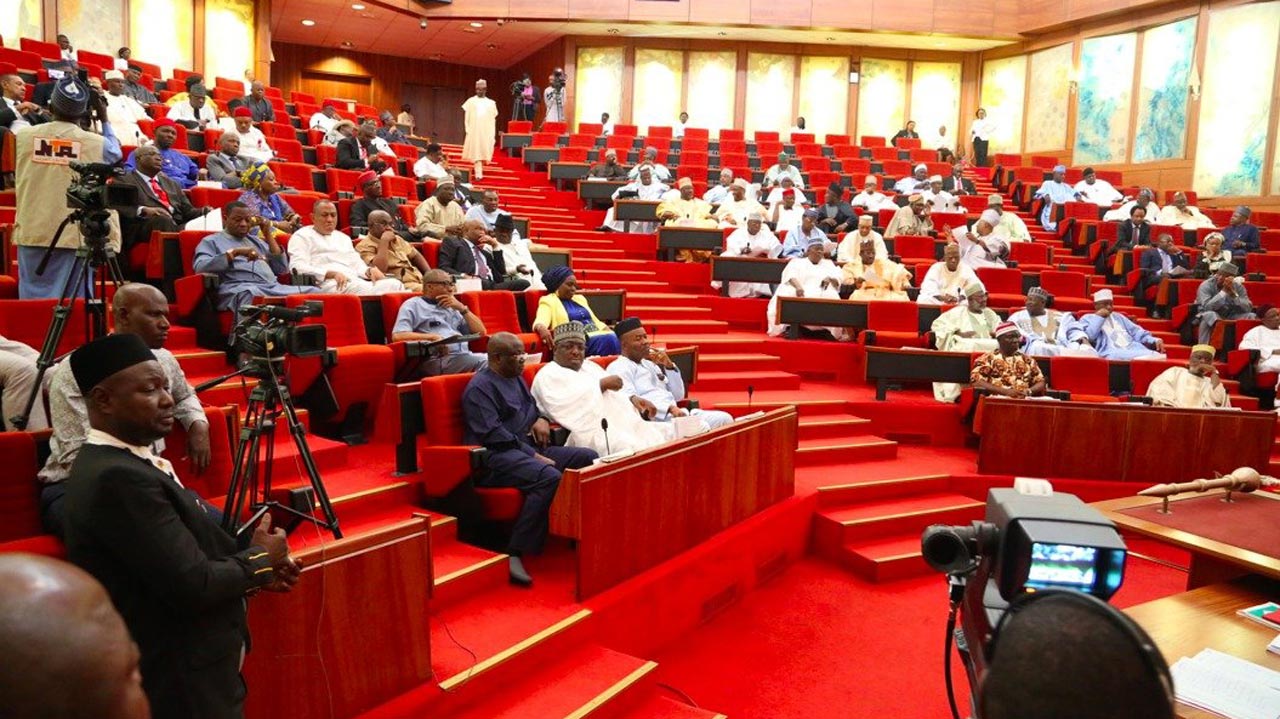
The Nigerian Senate has justified the passage of the Constitution of the Federal Republic of Nigeria (Alteration) (State Police) Bill, 2026, describing the proposed legislation as a necessary response to the country’s growing security challenges rather than a politically driven initiative.
The upper chamber maintained that the move to establish state police was informed by the urgent need to improve security across the country and should not be undermined by political interests or personal ambitions.
Leader of the Senate, Senator Opeyemi Bamidele, made the remarks in a statement issued by his Directorate of Media and Public Affairs, stressing that efforts to introduce state policing into Nigeria’s constitutional framework had been ongoing for several years.
He said the Bill emerged from an extensive constitutional review process and reflected the outcome of broad-based consultations with critical stakeholders nationwide.
According to Bamidele, despite reservations expressed by a few individuals, the majority of Nigerians have embraced the proposal, believing it would significantly improve security at the state and community levels.
READ ALSO: Senate Moves to Fast-Track State Police Legislation
The Senate Leader explained that the proposal for state police originated from memoranda submitted to the Senate Ad-hoc Committee on the Review of the 1999 Constitution and was subjected to rigorous scrutiny and multi-level consultations because of its far-reaching implications.
He noted that the National Assembly engaged widely with the Executive, the Nigeria Governors Forum, the Conference of Speakers of the State Legislatures of Nigeria, the leadership of the Nigeria Police and other stakeholders before the Bill was passed.
Bamidele recalled that the National Assembly held public hearings across the country’s six geopolitical zones in July 2025, where participants overwhelmingly endorsed the proposal.
He said the widespread support recorded during the consultations reflected the growing consensus that state police had become imperative in addressing the nation’s security concerns.
The Senate Leader further explained that the Nigeria Police made significant contributions to the drafting of the constitutional amendment, particularly in developing accountability and oversight mechanisms designed to prevent the misuse of state police by political actors.
He added that the police’s support for the legislation underscored its national importance in tackling insecurity at both state and local levels.
Beyond the contributions of the Nigeria Police, Bamidele said the Bill underwent exhaustive debates in both chambers of the National Assembly before its eventual passage.
He said: “Even though the APC is the majority, there are members of opposition parties – PDP, ADC, NDC and Labour Party – that exercised their discretion in favour of the Bill, mainly in the national interest and not on parochial basis.
“In the Senate, for instance, 84 out of 109 members voted clause by clause in support of the Bill. This accounted for 77.06% approval at the Senate alone,” he disclosed.
Defending the legislation, Bamidele said: “The legislative initiative is purely a child of necessity and not of political expediency as well as a product of national consensus and not of cynicism.”
He also argued that security should be viewed as a shared national responsibility rather than a partisan issue.
According to him: “Globally, security is a collective public good that benefits citizenry across ethnic, political and religious divides. Political actors elsewhere always throw off their togas of partisanship and parochialism to support initiatives that will boost and reinforce national security.”
Bamidele called on opposition parties and political leaders to contribute constructive ideas capable of strengthening peace, stability and national development.
He maintained that while differences of opinion are inevitable in a democracy, political actors have a responsibility to offer practical alternatives that advance the country’s progress.
According to him: “Even when they disagree on some grounds, they are under obligations to provide credible and useful ideas that can make our Nation better and greater. Unfortunately, they have not passed this critical test of opposition democracy.”
