
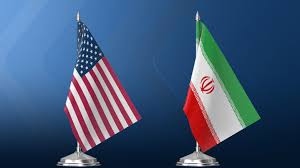
The United States and Iran have signed an interim agreement aimed at ending months of conflict between the two countries, with both sides releasing details of the accord as efforts begin to negotiate a permanent peace settlement.
The agreement, signed by U.S. President Donald Trump and Iranian President Masoud Pezeshkian, extends an existing ceasefire for another 60 days and outlines measures designed to reduce tensions across the region.
Speaking during the G7 summit in France, Trump warned that the United States would respond forcefully if Iran failed to comply with the terms of the deal.
“We’re going to bomb the hell out of them if they violate the agreement. I don’t want them to. I want them to honour the agreement,” Trump said.
The U.S. president, however, expressed optimism that ongoing negotiations could lead to a lasting settlement, describing Iranians as “smart people” and voicing hope that a permanent agreement would contribute to peace in the Middle East and help stabilise global oil markets.
READ ALSO: Iran Warns US Forces Over Strait of Hormuz Entry
Iranian officials welcomed the agreement, describing it as a diplomatic achievement. Iran’s chief negotiator, Mohammad Baqer Qalibaf, said the country had secured through negotiations what military action could not achieve.
“Everything we sought to achieve through military action, we obtained several times over through negotiation; it was not even comparable,” he said on state television.
The 14-point memorandum includes provisions for the continuation of the ceasefire, the resumption of maritime traffic through the Strait of Hormuz, the lifting of certain U.S. restrictions on Iranian ports, the easing of sanctions, the release of frozen Iranian assets and the establishment of a $300 billion reconstruction fund for post-war recovery.
Iran also reaffirmed its commitment not to develop nuclear weapons and agreed to international monitoring of its enriched uranium stockpile under the supervision of the International Atomic Energy Agency.
The announcement had an immediate impact on global energy markets, with oil prices falling on expectations of improved access through the Strait of Hormuz before recovering slightly following Trump’s renewed warnings.
Leaders of the G7 nations welcomed the agreement, viewing it as a potential step toward regional stability. However, uncertainty remains over the implementation of some provisions, including plans for a formal signing ceremony previously expected to take place in Switzerland.
The agreement also calls for an end to hostilities in Lebanon, where clashes between Israel and the Iran-backed Hezbollah have continued despite the ceasefire framework.
Trump also appeared to soften his earlier stance on Iran’s missile programme, saying it would be “a little bit unfair” for Iran to be denied ballistic missile capabilities while other countries possess them.
Meanwhile, the U.S. president publicly criticised Israeli Prime Minister Benjamin Netanyahu over military operations in Lebanon, urging a more restrained approach.
“Netanyahu happens to be a good man, gets a little excited sometimes,” Trump said. “You don’t have to knock down a building every time somebody walks into it that’s from Hezbollah.”
Despite the diplomatic breakthrough, fighting was still reported in parts of southern Lebanon, highlighting the challenges facing efforts to secure a comprehensive and lasting peace across the region.
