
The Sudanese Journalists Syndicate has been honoured by UNESCO with the 2025/Guillermo Cano World Press Freedom Prize for its commitment to delivering accurate and lifesaving information amid Sudan’s ongoing civil war.
The announcement was made on Thursday by the UN educational and cultural agency in recognition of the organisation’s courage in documenting attacks on journalists and defending press freedom during the conflict.
The war between the Sudanese Armed Forces (SAF) and the Rapid Support Forces (RSF), which erupted in April 2023, has triggered one of the world’s worst humanitarian and displacement crises.
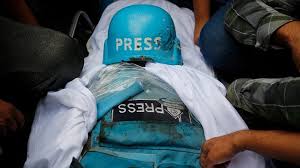
According to UNESCO, the syndicate has documented 32 journalist deaths, 556 violations against media workers, and widespread shutdowns of newspapers and radio stations, making Sudan one of the most dangerous countries for journalists.
UNESCO Director-General Khaled El-Enany praised the organisation’s resilience, saying its members have shown “extraordinary courage and unwavering dedication” despite immense challenges.
“Despite immense challenges, they continue, day after day, to deliver accurate, lifesaving information to their communities when it matters most,” he said, describing their work as vital to truth, accountability, and peace.
Chair of the syndicate, Abdelmoniem Ali, said the award represents recognition for all Sudanese journalists working under dangerous conditions.
He added that it reaffirms the importance of independent journalism in defending democratic values and amplifying civilian voices during conflict.
UNESCO also warned that Sudan’s media environment has severely deteriorated, with 90 per cent of media infrastructure destroyed and widespread internet and communication blackouts.
The agency noted that these conditions have created an “information vacuum,” worsened by disinformation and propaganda spreading across the country.
To support journalists, UNESCO has helped establish the Sudanese Media Forum, provided safe spaces in Port Sudan, and assisted dozens of journalists with relocation and emergency support.
The organisation said 49 journalists have so far received direct assistance.
As the world prepares for World Press Freedom Day on May 3, UNESCO also highlighted a global decline in press freedom, citing a 10 per cent drop in freedom of expression since 2012 and a rise in self-censorship and legal harassment of journalists.
Despite these challenges, the agency noted positive developments, including growing support for community media and improved legal frameworks in several countries.
UNESCO will host the World Press Freedom Conference in Lusaka, Zambia, next week, where it is expected to call for stronger global protection of independent journalism.
The Guillermo Cano World Press Freedom Prize, established in 1997, honours individuals and organisations that demonstrate exceptional commitment to press freedom, particularly under threat.
