
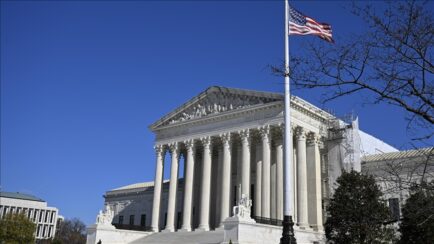
The Supreme Court of the United States (SCOTUS) has agreed to review the legality of an executive order signed by President Donald Trump seeking to limit birthright citizenship for certain children born in the United States.
The executive order, issued on January 20, 2025, the first day of Trump’s second term in office, directs federal agencies not to recognise U.S. citizenship for children born on American soil if neither parent is a U.S. citizen nor a lawful permanent resident.
The measure was swiftly challenged in court and subsequently blocked nationwide. Several lower courts, including a federal court in New Hampshire in the class-action case Barbara v. Trump, ruled that the order is unconstitutional. The courts held that it violates the Fourteenth Amendment, which guarantees that “all persons born or naturalised in the United States… are citizens of the United States.”
Also Read: US Ends Use of Race, Gender Criteria in Transport Funding
Legal challengers and civil-rights groups argue that birthright citizenship has been settled law for more than 150 years, anchored in the landmark 1898 Supreme Court ruling in United States v. Wong Kim Ark, which affirmed that children born in the U.S. to non-citizen parents are citizens.
However, the Trump administration contends that the original intent of the Citizenship Clause was to protect the rights of formerly enslaved people, not to extend automatic citizenship to children of undocumented or temporary immigrants. It argues that the phrase “subject to the jurisdiction thereof” implies lawful and permanent status, rather than mere birth within U.S. territory.
If upheld, the order could overturn more than a century of established constitutional interpretation and potentially deny citizenship to tens of thousands of children born each year to parents with undocumented or temporary immigration status. Analysts say such a ruling would mark one of the most significant shifts in U.S. immigration policy in modern history.
The Supreme Court agreed to hear the case after accepting an appeal from the U.S. Department of Justice, following the nationwide suspension of the order by lower courts. Although a date for oral arguments has not yet been fixed, the hearing is expected in the coming spring session, with a final ruling anticipated by next summer.
