
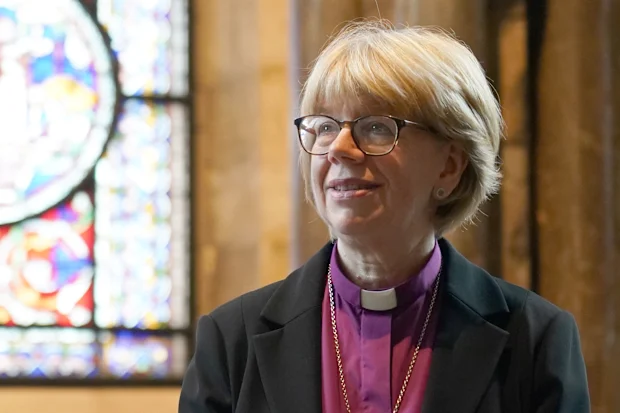
The Church of England on Friday named Sarah Mullally as the next Archbishop of Canterbury, the first woman to hold the office in its 1,400-year history.
Mullally, 63, a former nurse and the current Bishop of London, will succeed Justin Welby, who resigned following criticism over a child abuse cover-up scandal. She will become the ceremonial head of 85 million Anglicans worldwide, but her appointment has already provoked criticism from conservative Anglican churches, particularly in Africa.
Laurent Mbanda, Archbishop of Rwanda and chairman of a global grouping of conservative Anglican churches, told Reuters the decision made it impossible for the Archbishop of Canterbury “to serve as a focus of unity within the Communion.”
Since becoming Bishop of London in 2018, Mullally has championed liberal causes, including blessings for same-sex couples — a major source of contention within the global Anglican Communion, where homosexuality remains outlawed in some countries.
Asked about the issue in an interview with Reuters on Friday, Mullally admitted, “It may not be resolved quickly,” but added that the Church has long wrestled with difficult questions.
In her address at Canterbury Cathedral, she struck a conciliatory tone: “I will seek to help every ministry to flourish, whatever our tradition.”
Mullally also pledged to strengthen safeguarding standards in the Church, saying: “My commitment will be to ensure that we continue to listen to (abuse) survivors, care for the vulnerable and foster a culture of safety and well-being for all.”
She condemned rising antisemitism, citing Thursday’s deadly attack on a synagogue in Manchester, and spoke of the moral and political challenges facing Britain. “We are witnessing hatred that rises up through fractures across our communities,” she said.
Also Read: Britain Names New Archbishop of Canterbury Friday
Before her clerical career, Mullally worked as a cancer nurse and later as England’s Chief Nursing Officer in the early 2000s. Ordained in 2002, she became one of the first women bishops in the Church of England in 2015.
“There are great commonalities between nursing and being a priest. It’s all about people, and sitting with people during the most difficult times in their lives,” she once said.
Linda Woodhead, professor of theology and religious studies at King’s College London, praised her leadership qualities: “Her emphasis on unity, gentleness and strength is exactly what the Church, and nation, needs right now.”
Her selection reflects reforms introduced more than a decade ago to allow women to serve in senior clerical positions. However, those reforms remain rejected by many churches in Africa and Asia, deepening global divisions.
Married with two adult children, Mullally is an outspoken opponent of assisted dying legislation currently under debate in Britain, describing such proposals as “unworkable and unsafe” and a risk to the most vulnerable.
The appointment was announced by Prime Minister Keir Starmer’s office with the formal consent of King Charles III, who, as monarch, serves as Supreme Governor of the Church of England a role created when Henry VIII broke from the Catholic Church in the 16th century.
