
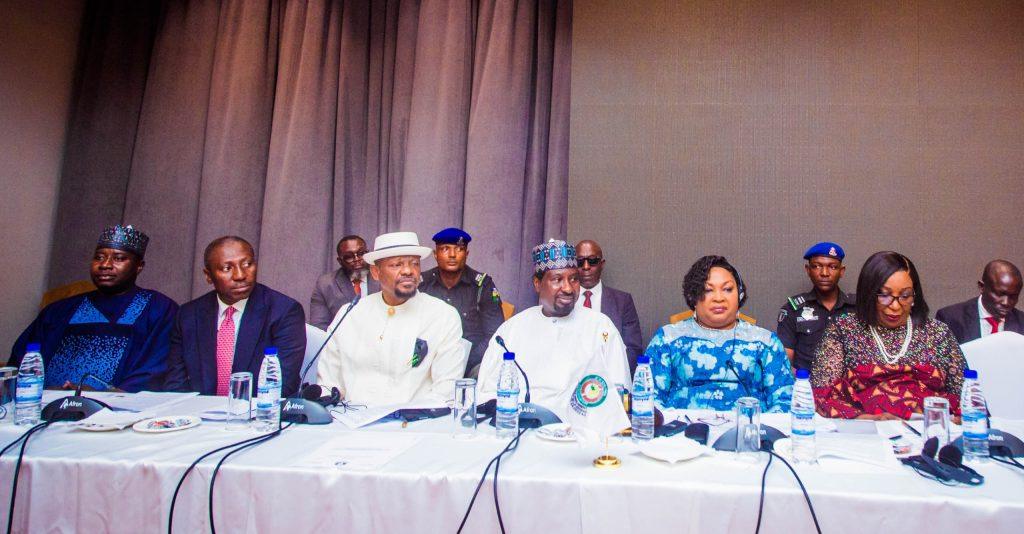
Members of the ECOWAS Parliament have asserted that the adoption of Artificial Intelligence (AI) will improve legislative drafting, expand citizen engagement in policymaking, and foster democracy and development across the West African region.
This statement was made during the inaugural session and the Second Parliamentary Seminar of the ECOWAS Parliament at its 2025 Extraordinary Session, held in Port Harcourt, the capital of Rivers State. The seminar, themed “Harnessing Artificial Intelligence for Parliamentary Efficiency, Ethical Governance, and Development in the ECOWAS Region,” focused on the potential of AI in legislative and governance processes.
The seminar called on lawmakers to commit to leveraging AI to stimulate growth in critical sectors within the region, ensuring a digitally inclusive and empowered environment.
In her opening speech, the Speaker of the ECOWAS Parliament, Hajia Memounatou Ibrahima, highlighted that AI is not just a futuristic concept but a tangible force capable of enhancing communication between parliamentarians and the citizens of West Africa, thus advancing both social and economic development.
“AI has emerged as a global competitive tool, and legislators in the region must harness it to improve democracy through better regulatory frameworks,” Ibrahima said.
Jubrin Barau, the Deputy President of the Nigerian Senate and First Deputy Speaker of the ECOWAS Parliament, urged the lawmakers to consider the risks associated with AI and devise a clear pathway for its responsible and ethical use for the benefit of the people.
“AI is reshaping governance, economies, and societies worldwide. For legislators tasked with lawmaking, representation, and oversight, AI presents a unique opportunity to enhance efficiency, strengthen accountability, and promote development,” Barau stated.
Also Read: ECOWAS Parliament Seeks Legal Framework for AI Development
In a welcome address, the Governor of Rivers State, Siminalayi Fubara, represented by his Deputy, Professor Ngozi Odu, urged legislators to engage in discussions that would lay the groundwork for legislation on how AI can be used to strengthen democratic governance without undermining it.
“Rivers, as Nigeria’s energy capital and a growing technology hub, offers valuable insights on this matter. Harnessing AI for parliamentary efficiency must be adapted to fit within our traditional governance structures while fostering emerging technological ecosystems,” Fubara remarked.
The Permanent Secretary of Nigeria’s Ministry of Foreign Affairs, Ahmed Dunoma, stressed that AI has transitioned from a theoretical concept to a present-day reality, making significant impacts across sectors such as education, healthcare, security, commerce, communication, and governance.
“For West Africa, the real challenge is not whether AI will transform our societies, but how we, as leaders, policymakers, and parliamentarians, will navigate this transformation to ensure it reinforces democratic governance, strengthens regional integration, and enhances the quality of life for our citizens,” Dunoma concluded.
In his goodwill message, the Speaker of the Rivers State House of Assembly, Mr. Martins Amaewhule, underscored the importance of AI and expressed confidence that the seminar would offer practical strategies for leveraging AI’s opportunities.
Amaewhule also pledged to remain vigilant in addressing the ethical, security, and socio-economic challenges associated with AI, especially in a region still confronting issues such as the digital divide, unemployment, and cybersecurity risks.
