
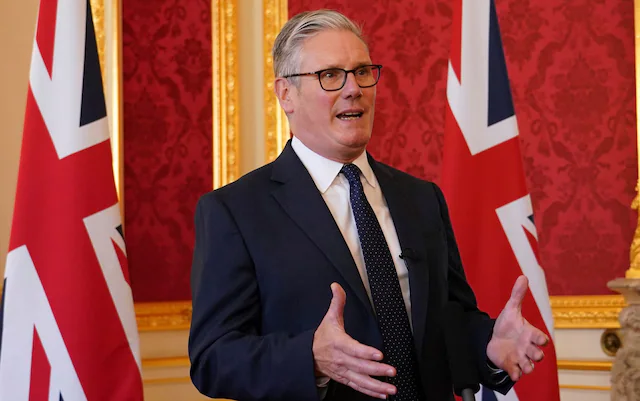
The British government said on Friday it would require every employee to hold a digital identity document, in Prime Minister Keir Starmer’s latest move to curb illegal migration and blunt the rise of the populist Reform UK party.
Addressing the Global Progress Action Summit alongside the leaders of Canada, Australia and Iceland, Starmer admitted his Labour government and others had been “squeamish” about confronting voters’ concerns over immigration.
That hesitation had allowed Reform UK, led by Brexit campaigner Nigel Farage, to gain support, Starmer said, acknowledging it was likely to be Labour’s main challenger at the next election due in 2029.
“That is why today I am announcing this government will make a new, free-of-charge, digital ID mandatory for the right to work by the end of this parliament,” he said.
Starmer accused Britain’s right-wing parties of fostering a “toxic divide”, setting up what he described as a battle between “patriotic national renewal” and rising populism.
Immigration is consistently cited as one of British voters’ biggest concerns after the cost of living. Starmer faces pressure to stop the flow of migrants crossing the Channel in small boats from France.
The plan drew swift criticism from political opponents. “It’s laughable that those already breaking immigration law will suddenly comply, or that digital IDs will have any impact on illegal work, which thrives on cash-in-hand payments,” a Reform spokesperson said.
Digital roll-out
The government said the digital ID would be stored on people’s mobile phones and become a mandatory part of employment checks. Over time, it would also provide access to services such as childcare, welfare and tax records.
Identity cards are common elsewhere in Europe, but Britain scrapped them after World War Two. Labour attempted to reintroduce them in the 2000s before dropping the plan amid civil liberties concerns.
Britain, which has a poor record on large IT projects, said it would draw on examples from Estonia, Denmark, Australia and India.
An Ipsos poll in July found 57% of Britons supported a national ID scheme, though three in 10 worried about data misuse, commercial exploitation and security breaches.
Irish nationalist leaders in Northern Ireland also criticised the plan. First Minister Michelle O’Neill called it “ludicrous and ill-thought-out,” noting many residents there hold Irish passports rather than British ones.
