
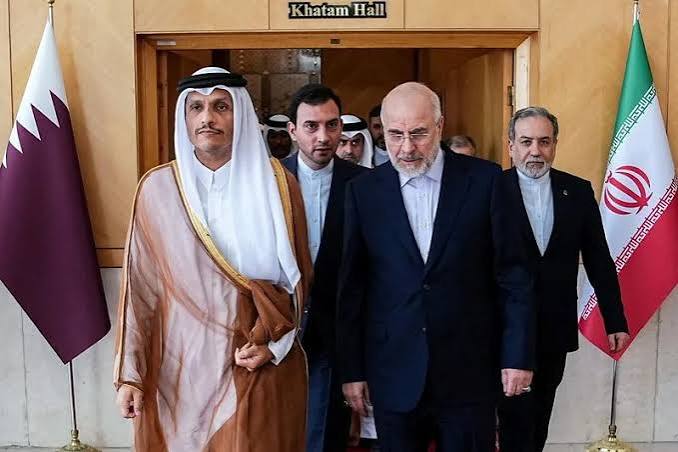
Qatar’s Prime Minister Sheikh Mohammed bin Abdulrahman Al Thani visited Tehran on Thursday in an effort to revive stalled diplomacy between Iran and the United States, six months into the war.
The visit came as US President Donald Trump said Washington was not currently holding talks with Tehran.
“We don’t want to speak to them. We’re not looking to meet or anything,” Trump told reporters in the Oval Office.
White House press secretary Karoline Leavitt said the US would continue its economic campaign against Iran until Tehran agreed to negotiate meaningfully.
In Tehran, Al Thani met Iran’s top negotiator, Mohammad Baqer Qalibaf, and urged a return to diplomacy, Qatar’s foreign ministry said.
Iranian Foreign Minister Abbas Araqchi called on regional countries to prevent the United States from using their territory for military or economic operations against Iran.
Mohsen Rezaei, secretary of Iran’s Supreme National Security Council, also warned that Tehran would target US military and economic interests if Washington took hostile action against Iran.
READ ALSO: Trump Warns Economic Penalties for Countries Supporting Iran
Rezaei said the United States would have to meet several Iranian demands before Tehran would consider reopening the Strait of Hormuz. These include ending the US blockade of Iranian ports, providing compensation and lifting sanctions.
The Strait of Hormuz, a vital shipping route between Iran and Oman, carried about a fifth of global energy supplies before the war. Its reopening has become a key issue in efforts to resolve the conflict.
Al Thani said he had stressed the importance of maintaining freedom of navigation through the waterway. Qatar and Iran also discussed a proposal for a temporary joint Iranian-Omani shipping corridor and a project to clear mines from the strait.
Iranian authorities have sought greater control over shipping through the waterway, while Washington has insisted that it remain open to international navigation.
The diplomatic efforts come as major combat operations have been paused for several weeks, although no broader peace agreement has been reached.
Trump has instead focused on economic pressure against Tehran, despite political pressure at home over rising energy prices ahead of the November congressional elections.
Leavitt said no negotiations were currently taking place between Washington and Tehran.
“No negotiations are happening right now, and this will continue until the president feels that maybe they come to the table in a meaningful way,” she said.
Iran has been under various forms of US sanctions since the 1979 Islamic Revolution. Despite heavy military losses, Tehran retains missile and drone capabilities that could threaten Gulf states hosting US forces and disrupt shipping through the Strait of Hormuz.
The International Maritime Organization has reported 70 incidents in the strait since February 28, resulting in the deaths of 19 seafarers.
Thousands of people have been killed since the conflict began, mainly in Iran and Lebanon.
