
The Nigerian Government has unveiled plans to strengthen its film and digital content industry through regulatory reforms, improved financing, intellectual property protection and international partnerships.
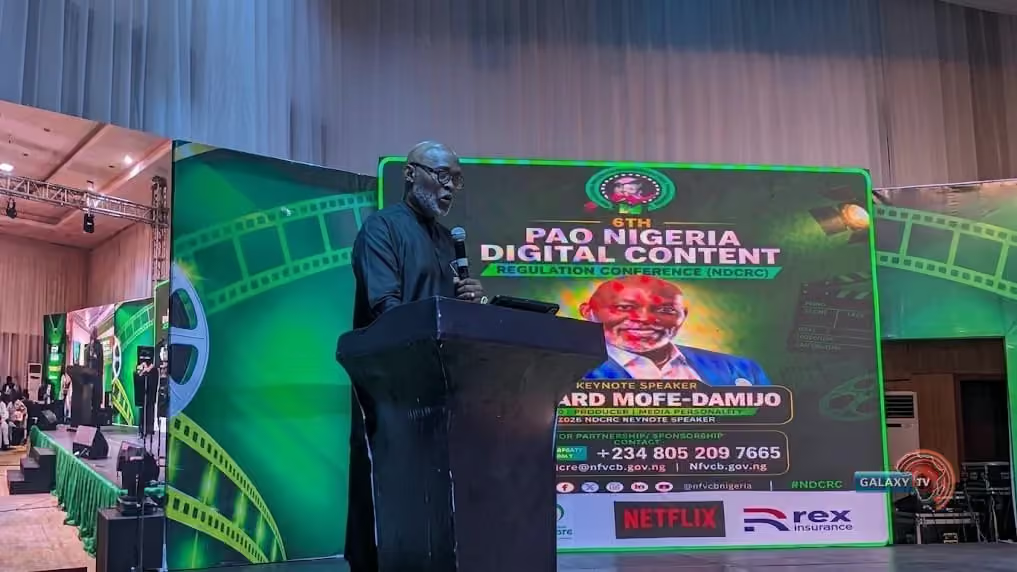
The Minister of Art, Culture, Tourism and Creative Economy, Hannatu Musawa, and the Executive Director of the National Film and Video Censors Board (NFVCB), Dr Shaibu Husseini, disclosed this at the sixth Peace Anyiam-Osigwe Nigeria Digital Content Regulatory Conference in Lagos.
The two-day conference is themed, “Film and Content Production in the Digital Era: Balancing Regulation and Innovation”.
Musawa, represented by the Special Adviser to the President on Art and Culture, Moriam Ajaga, said Nollywood produces more than 2,500 films annually, making it one of the world’s largest film industries by output.
She, however, said the sector required stronger institutional and financial structures to translate its creative potential into sustainable economic growth.
READ ALSO: NFVCB, NCC Partner to Tackle Digital Piracy, Unlicensed Streaming
According to her, the government is working to transform the creative economy from a largely talent-driven sector into a structured, investment-ready and globally competitive industry under President Bola Tinubu’s Renewed Hope Agenda.
She identified the Creative Economy Development Fund (CEDF) as one of the initiatives designed to expand access to financing for creative businesses through debt, equity and grant funding.
The minister said the fund would particularly support filmmakers and production companies facing difficulties accessing affordable capital.
She urged practitioners to take advantage of the extended Phase Two application window through the fund’s website, www.cedf.gov.ng.
Musawa also highlighted government efforts to strengthen intellectual property protection, ensuring that filmmakers retain greater control over their creative works and derive economic benefits from their intellectual assets.
She said the NFVCB was equally advancing regulatory reforms through the upgraded Magpie Classification Module to improve the classification of films, music videos and dramatised skits.
According to her, the objective is to promote responsible content production without restricting artistic expression, while protecting vulnerable audiences.
The minister further disclosed that Nigeria was strengthening audiovisual co-production partnerships with countries, including South Africa and France, while negotiations were ongoing with other international partners.
She said the partnerships were expected to promote skills transfer, attract investment and expand distribution opportunities for Nigerian productions.
Musawa called on filmmakers, regulators, investors and digital platforms to collaborate in expanding distribution channels, protecting creators’ rights and encouraging responsible innovation.
Earlier, Husseini said the board was pursuing institutional renewal and regulatory modernisation to address emerging challenges in film and digital content production.
He identified technology-driven classification, licensing and monitoring, media literacy, preservation of audiovisual heritage, staff development and improvements to the distribution and exhibition ecosystem as key priorities.
Husseini said the growing influence of artificial intelligence, streaming platforms, digital distribution and emerging production technologies had created new opportunities while raising concerns about intellectual property, authorship, ownership, content standards and consumer protection.
Highlighting the board’s achievements, he disclosed that the NFVCB had secured a permanent headquarters after 28 years without one, describing the development as a significant milestone for institutional stability and improved service delivery.
He also highlighted the implementation of the 2024 regulation on the control of the promotion and glamourisation of tobacco, narcotics, ritual killings and money rituals in film and video productions.
According to him, the board’s tobacco-control advocacy received international recognition through the World Health Organisation Director-General’s Special Award for the African Region and a Certificate of Appreciation.
The NFVCB chief executive noted that the expansion of digital distribution through streaming platforms, video-sharing websites, social media and mobile applications had made content classification, monitoring and licensing more complex.
He said this had necessitated stronger collaboration with relevant institutions, including the Nigerian Communications Commission.
Husseini added that the board was strengthening engagement with filmmakers, producers, distributors, exhibitors, professional guilds, streaming operators, academics and other stakeholders to build a more structured and sustainable screen economy.
He further disclosed that the board was pursuing an amendment to its enabling law through the National Assembly to remove the word “Censors” from its name and reposition it as a classification-focused regulatory organisation.
He said the proposed change reflected the board’s shift from the traditional perception of censorship towards content classification.
“Since March 2024, we have increasingly emphasised classification rather than the traditional perception of censorship.
“Classification informs audiences, supports informed viewing choices, protects consumers and gives filmmakers a clearer framework for responsible creative freedom,” he said.
