
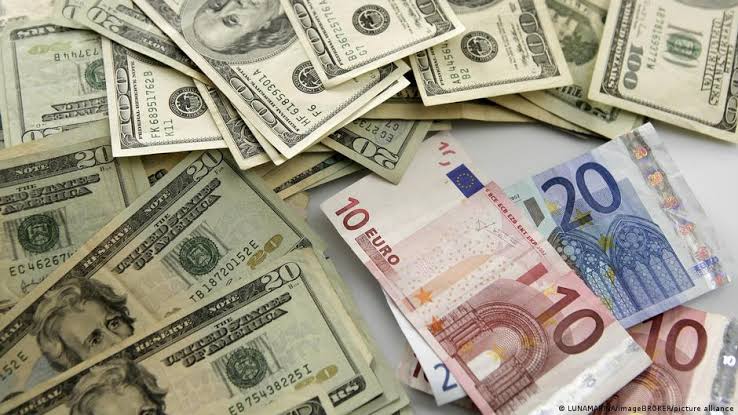
The US dollar edged higher in subdued Asian trading on Monday as violent protests in France weakened the euro, while investors assessed developments in China’s economy and awaited key interest rate decisions by the US Federal Reserve and the European Central Bank.
The euro fell 0.1 per cent to 1.1230 dollars, helping to stabilise the greenback, which traded largely unchanged at 101.82 on the dollar index.
French President Emmanuel Macron condemned what he described as “shocking” scenes of violence during protests over the cost of living, following one of the country’s worst periods of unrest in years.
The unrest has heightened concerns about France’s fiscal outlook and weighed on investor sentiment towards the euro.
Kieran Williams, head of Asia foreign exchange at InTouch Capital Markets, said the protests were likely to affect the euro mainly through the French bond market.
“With the OAT-bund spread already close to 140 basis points, appetite for the euro is likely to stay thin this week and I’d expect rallies to be sold until there is a clearer outcome on the budget,” Williams said.
Against the Japanese yen, the dollar was unchanged at 158.09 yen after Bank of Japan Governor Kazuo Ueda said underlying inflation was “quite close” to the central bank’s two per cent target.
The dollar weakened 0.1 per cent to 6.6811 yuan in offshore trading, reaching its lowest level since June 2022, after data released on Monday showed that China’s gross domestic product grew slightly more than expected in the third quarter.
In Southeast Asia, the Indonesian rupiah extended its losses for a fourth consecutive day, slipping 0.2 per cent to near a three-month low.
The decline followed a warning by index compiler MSCI that Indonesia’s stock market could be downgraded from its flagship emerging markets index to standalone status. The warning triggered an 11.6 per cent fall in Indonesian equities.
MUFG analysts said concerns over the potential downgrade were adding pressure on the rupiah, alongside higher US yields, weaker external balances resulting from elevated oil prices and challenges facing Bank Indonesia.
Elsewhere, the Australian dollar rose 0.5 per cent to 0.6975 dollars, while the New Zealand dollar was unchanged at 0.5655 dollars. The British pound also held steady at 1.3329 dollars.
Oil prices fell in Asian trading, with Brent crude futures declining 1.7 per cent to 108.01 dollars a barrel after US President Donald Trump waived sanctions and tariffs on Russia, potentially paving the way for increased Russian fuel exports.
In the United States, interest rate futures indicated an 87 per cent probability that the Federal Reserve would leave rates unchanged at its next policy meeting, beginning on October 28, according to the CME Group’s FedWatch tool.
Investors are also looking ahead to the European Central Bank’s meeting on October 29, with market participants expected to remain cautious ahead of both decisions.
In cryptocurrency markets, bitcoin rose 1.9 per cent to 82,479.24 dollars, while ether gained three per cent to 2,420.22 dollars.
