
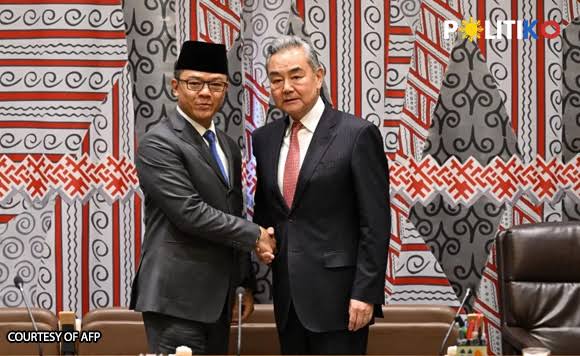
China and Indonesia have begun high-level talks on security, defence, politics and economic cooperation as Jakarta seeks to maintain balanced relations with Beijing and Washington.
Chinese Foreign Minister Wang Yi held talks with Indonesian Foreign Minister Sugiono in Jakarta on Friday, during his first visit to Indonesia in two years. The meeting was followed by plans for a “2+2” dialogue involving the countries’ defence ministers.
Wang said the discussions were taking place amid growing international challenges and urged both sides to use the opportunity to deepen cooperation.
“Unilateralism and hegemonic acts have a serious impact on global cooperation and stability,” Wang said, stressing China’s commitment to high-level cooperation with Indonesia.
The talks covered economic relations and political ties, while defence cooperation and regional and international security were also expected to feature prominently.
READ ALSO: China, Canada Ease Trade Tariffs After High-Level Talks
Defence Cooperation Expands
Chinese Defence Minister Dong Jun separately met his Indonesian counterpart, Sjafrie Sjamsoeddin, in Jakarta.
Dong said the two countries had significant opportunities to strengthen military cooperation and improve their capacity to protect their respective national interests.
“The prospects for cooperation between the two militaries are broad,” he said, adding that bilateral defence ties were becoming more effective.
Sjafrie said Indonesia and China would increase military engagement through joint exercises, officer exchanges and cooperation in the defence industry.
The discussions followed a recent naval exercise involving China and Indonesia east of Taiwan, which Taipei criticised. Indonesia described the exercise as routine and noted that its navy also conducts drills with Japan and the United States.
South China Sea Poses Challenge
The growing defence ties come as tensions persist in the South China Sea, where China claims sovereignty over most of the disputed waters.
Indonesia has adopted a cautious approach to the competing territorial claims involving China, the Philippines, Malaysia and Vietnam.
President Prabowo Subianto has repeatedly reaffirmed Indonesia’s “free and active” foreign policy, under which Jakarta seeks friendly relations with all countries while avoiding formal alignment with major power blocs.
Economic Relations Remain Key
Trade and investment are also central to the relationship.
Chinese investment in Indonesia reached about $3.9 billion in the first half of 2026, according to Indonesian figures.
However, some Chinese businesses have expressed concerns over Indonesia’s regulatory environment, including increased taxes and changes to nickel pricing.
The China Chamber of Commerce in Indonesia has warned that stricter regulations and higher operating costs could discourage further investment.
Major Chinese investors in Indonesia include electric vehicle battery manufacturer Contemporary Amperex Technology and steel producer Tsingshan Group, which operates nickel-processing facilities in the country.
The latest diplomatic engagement is expected to strengthen cooperation while helping both sides manage differences over investment policies, defence and regional security.
