
The Federal Executive Council (FEC) has approved Double Taxation Avoidance Agreements with Ghana, Tanzania and Switzerland as part of efforts to improve Nigeria’s investment environment and encourage cross-border business.
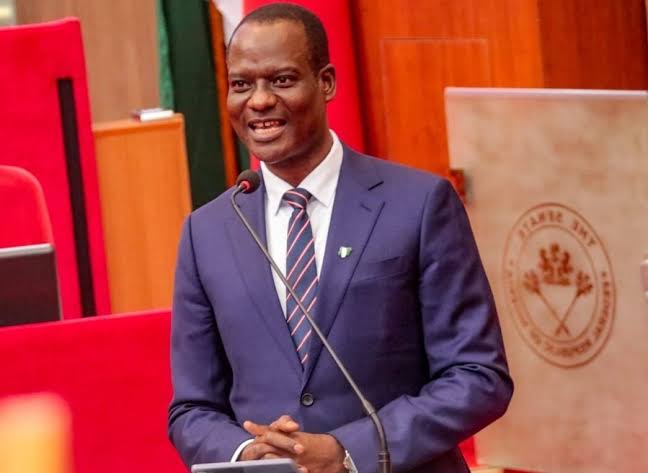
The Minister of Finance and Coordinating Minister of the Economy, Taiwo Oyedele, disclosed this on Wednesday while briefing State House correspondents after the FEC meeting chaired by President Bola Tinubu in Abuja.
Oyedele said the agreements would prevent businesses and investors operating between Nigeria and the three countries from paying tax twice on the same income.
He explained that the treaties would expand Nigeria’s tax agreement network, support international investment and strengthen the country’s position as a destination for foreign capital.
The minister said the government would continue negotiating similar agreements with other countries to create more opportunities for Nigerian companies to invest abroad while attracting foreign investors into the country.
He noted that Nigeria’s latest agreements were also aimed at strengthening economic ties with important trading partners, particularly Ghana.
FEC Approves $1.25bn Facility for Jobs
Oyedele also announced FEC approval of a $1.25 billion financing package from the International Development Association and the International Bank for Reconstruction and Development.
The facility will support Nigeria’s Investment and Jobs Acceleration Development Policy Financing programme, with a focus on boosting investment and creating employment.
According to the minister, the funding was secured on concessional terms, with repayment spread over about 30 years.
He described job creation as a major priority for the administration and said the facility would help accelerate efforts to expand employment opportunities.
Tinubu Orders Probe of Fake Government Agencies
President Tinubu has meanwhile directed a comprehensive forensic review of government administrative, accounting and payroll systems following the discovery of additional fictitious government agencies by the Independent Corrupt Practices and Other Related Offences Commission (ICPC).
Oyedele said the investigation followed the discovery of a fake entity known as the Presidential Foreign Intervention Promotion Council, which had managed to obtain an office, administrative code and Treasury Single Account code within the government system.
He said investigators had identified other fictitious agencies and that the review would determine how such entities were able to penetrate government structures.
Although no government funds were paid into the accounts linked to the fake agency, Oyedele said the development exposed serious weaknesses that required urgent correction.
The review will also cover the Integrated Personnel and Payroll Information System (IPPIS) amid concerns that fictitious agencies could potentially be linked to fraudulent employees on the government payroll.
Government to Strengthen Payroll Controls
The Minister of Information and National Orientation, Mohammed Idris, said the ICPC investigation was carried out following an earlier directive from the President.
He disclosed that the commission had identified at least two additional fictitious agencies and said the findings pointed to weaknesses in government’s administrative processes.
President Tinubu has directed the Attorney-General of the Federation and the Finance Minister to work with relevant agencies and professional audit firms to conduct a forensic assessment of the affected systems.
The exercise is expected to identify loopholes, determine how they were exploited and introduce measures to prevent similar incidents.
Idris stressed that the investigation would not necessarily assume that the weaknesses originated under the current administration, noting that some vulnerabilities could have existed before it took office.
Oyedele also linked the review of IPPIS to efforts to improve the welfare of genuine public servants and prevent government funds from being diverted to fictitious personnel.
He said the government had spent about ₦9.5 trillion on incremental salary and allowance payments for public workers, underscoring the need to protect public resources and strengthen payroll controls.
