
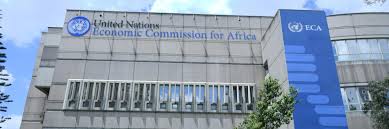
The Economic Commission for Africa (ECA) has called for urgent and coordinated efforts to address water and sanitation challenges across the continent.
ECA Executive Secretary Claver Gatete made the appeal during a high-level session on Clean Water and Sanitation at the 12th Africa Regional Forum on Sustainable Development, held virtually.
He stressed that water should be regarded not only as a basic human necessity but also as critical economic infrastructure that supports health, food systems, energy, and industrialisation.
“Water is life, but it is also economic infrastructure that underpins health, food systems, energy and industrialisation,” he said.
Gatete noted that Africa has made progress since 2015, with nearly 300 million people gaining access to basic drinking water, while about 190 million people have gained access to basic sanitation.
However, he expressed concern that major gaps remain, as only about 40 per cent of Africans currently have access to safely managed drinking water, while just 30 per cent have access to safely managed sanitation services.
He further revealed that over 200 million people still practise open defecation, according to 2024 estimates.
Gatete warned that water insecurity is increasingly becoming a systemic risk, affecting food production, energy security, and economic growth across Africa.
He added that poor water and sanitation services are placing pressure on health systems and reducing productivity, while rapid urbanisation and climate change continue to worsen the situation.
According to him, Africa requires about $64 billion annually to achieve water security and universal sanitation, but current investment levels remain insufficient.
READ ALSO: Ethiopia Inaugurates Africa’s Largest Hydroelectric Dam
He called for water to be fully integrated into national economic planning, alongside strengthened financing mechanisms and improved data systems to guide decision-making.
Gatete also emphasised the need for climate-resilient solutions and large-scale coordinated implementation, as well as stronger cooperation on transboundary water resources to enhance regional integration and stability.
He reaffirmed the ECA’s commitment to supporting member states in transforming water into a driver of inclusive growth and sustainable development.
Speaking at the session, African Union Commissioner for Agriculture and Rural Development, Mr Moses Vilakati, acknowledged progress in expanding access to water but noted persistent inequalities in rural areas and informal settlements.
Also, Christopher Mutasa of the African Development Bank (AfDB) called for stronger public-private partnerships to accelerate investment in water infrastructure.
Other stakeholders stressed that coordinated action is essential to achieving Sustainable Development Goal 6, noting that water security remains central to Africa’s long-term development agenda.
