
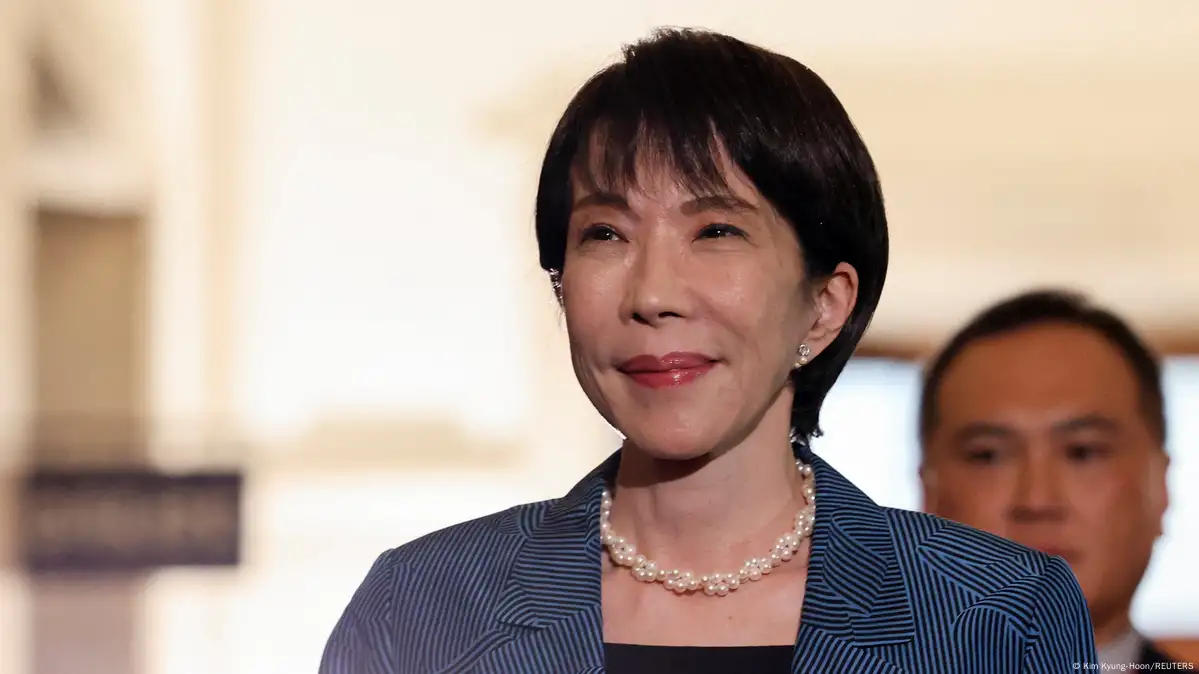
Japan on Tuesday appointed Sanae Takaichi as its first female prime minister, following an 11th-hour coalition agreement that ended days of political uncertainty.
Takaichi, a 64-year-old conservative and self-professed admirer of Margaret Thatcher, assumes office as Japan’s fifth premier in five years, tasked with leading a fragile minority government amid pressing diplomatic and domestic challenges.
Takaichi secured a narrow victory in the lower house of parliament before the upper house confirmed her appointment in a runoff vote. She will formally take office after meeting Emperor Naruhito. Her rise comes barely two weeks after she was elected leader of the ruling Liberal Democratic Party (LDP) on October 4, succeeding Shigeru Ishiba.
Her leadership was immediately tested when the LDP’s long-time coalition partner, Komeito, withdrew over concerns about her conservative views and a party funding scandal. Forced to seek new allies, Takaichi struck a late-night agreement with the reformist Japan Innovation Party (JIP) on Monday, securing enough support to form a government. The JIP’s priorities include scrapping corporate donations, slashing the number of lawmakers, and reducing consumption tax on food to zero.
Promising to “make Japan’s economy stronger and reshape Japan for future generations,” Takaichi faces an uphill task in reviving public confidence in the LDP and steering the economy ahead of a scheduled visit by U.S. President Donald Trump next week.
The new prime minister, a former heavy metal drummer from Nara, is known for her hardline stance on China and her loyalty to former premier Shinzo Abe. She has also pledged to form a cabinet with “Nordic” levels of female representation—an ambitious goal in a country that ranks 118th in the World Economic Forum’s 2025 Global Gender Gap Report.
Despite her conservative positions on issues such as same-surname marriage laws and imperial succession, Takaichi has spoken openly about women’s health and the need for greater support for working mothers. Many Japanese citizens have expressed cautious optimism, hoping her leadership will bring fresh perspectives to governance.
Takaichi’s immediate challenges include reviving Japan’s sluggish economy, addressing the population decline, and managing foreign policy tensions, particularly with China and Russia. With her coalition in the minority in both houses of parliament, she will need cross-party backing to pass key legislation.
As Japan awaits her first policy moves, Takaichi’s premiership marks a historic moment in the nation’s politics, one that could redefine both gender and leadership in Asia’s second-largest economy.
