
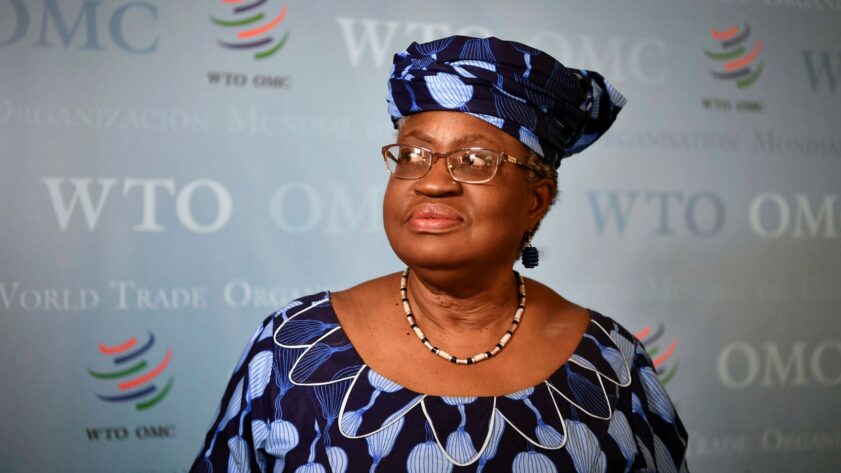
The Director-General of the World Trade Organisation (WTO), , has called on West African countries to unite in building regional value chains capable of attracting investment, improving incomes, and reducing market volatility.
Speaking at the West Africa Economic Summit (WAES) in Abuja, Nigeria, Dr Okonjo-Iweala emphasised that a cohesive ECOWAS strategy, rather than fragmented national efforts, is essential to establishing competitive and scalable economies across the region.
“If each of our countries works alone, it is unlikely that we will be able to build efficient value chains that attract the investment we need,” she warned.
“However, if ECOWAS can think in terms of sub-regional value chains, our markets and scale economies become big enough to attract investors.”
She highlighted the pharmaceutical industry as one key area with high potential, recalling the experience of the COVID-19 pandemic when African countries found themselves at the back of the queue for vaccines.
“Senegal, with its Institut Pasteur de Dakar, is a potential hub for vaccines,” she noted.
Dr Okonjo-Iweala urged the region to capitalise on its “green comparative advantage” by developing solar and wind power to support the processing of critical minerals and to move “up the electric value chain” by producing battery components for electric vehicles.
She also called for the expansion of the services and tourism sectors across borders.
“In the services sector, we could have a Jumia and Flotilla wave of Nigeria start to operate across borders in the region, showing the way for others,” she said.
“We could also aim to have more support for tourism that is driven by the cultural industries.”
Addressing the structural impediments to regional trade, the WTO chief called for the removal of trade barriers and the closure of infrastructure gaps physical, regulatory, and digital.
“We need to lower trade costs that remain among the world’s highest and give full effect to the African Continental Free Trade Agreement (AfCFTA) and ECOWAS-wide integration,” she said.
Dr Okonjo-Iweala described the summit as “an unparalleled platform” to confront these challenges and urged West African countries to unite around a common purpose to build a better future.
“Let us seize this opportunity to come together in common purpose, anchored by a rich cultural heritage, and build a West Africa where our young people find boundless opportunities for a better future,” she added.
Deputy Secretary-General of the United Nations, Amina Mohammed, also lent her voice to the call for regional integration. She noted that ECOWAS could add nearly $140 billion to West Africa’s GDP and lift over 30 million people out of extreme poverty.
“Through bold political will and strong institutions, ECOWAS continues to chart a path towards shared
Also Read: WAES 2025: Tinubu’s Envoy Meets Ouattara on Regional Trade
She, however, cautioned against ignoring pressing threats such as political instability, insecurity, climate change, and rising inequality.
“These are not isolated issues, they are deeply interconnected, and they demand coordinated African-led responses,” she said.
Citing positive progress in infrastructure, including the strategic Dakar-Lagos and Abidjan-Ouagadougou-Niamey corridors, she said such developments are helping to boost the movement of people, goods, and ideas across West Africa.
She also stressed the importance of utilising the African Continental Free Trade Area (AfCFTA) to achieve the region’s long-term development goals.
“And the African Continental Free Trade Area offers a historic opportunity to deepen intra-African trade, expand regional value chains, and unlock public and private finance. These efforts are central to achieving both Agenda 2030 and Agenda 2063,” she said.
Despite some gains, both leaders expressed concern over the low level of intra-regional trade.
“In 2023, foreign direct investment in ECOWAS countries reached $12 billion, and regional exports totalled $130 billion. Yet, intra-ECOWAS trade stands at just 11%. This is a gap that must be closed if our region is to realise its economic ambitions,” Dr Okonjo-Iweala said.
