
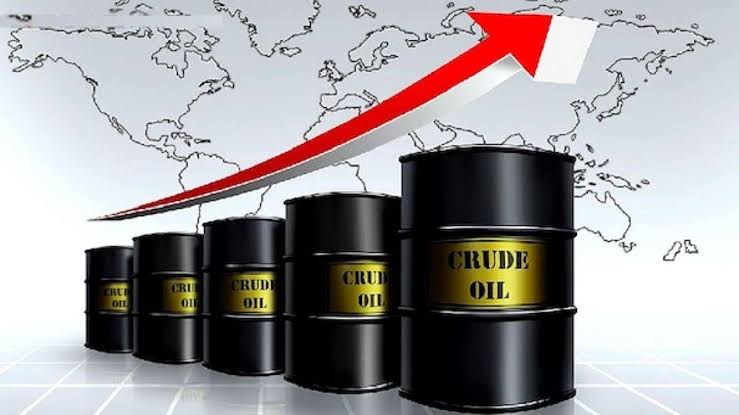
Global oil prices rose on Wednesday as renewed tensions in the Middle East coincided with a storm threatening oil and gas infrastructure in the Gulf of Mexico.
Brent crude rose about 0.9 per cent to $101.51 a barrel, while US West Texas Intermediate (WTI) gained roughly 0.9 per cent to $90.25.
The gains followed attacks by Iran-backed Houthi forces on Saudi Arabia on October 5, which damaged airports in Jizan and Najran and injured three people, according to Saudi authorities.
The attacks have heightened concerns over the Bab el-Mandeb, a strategic route for global energy shipments, while the approaching storm in the Gulf of Mexico has raised concerns about disruptions to offshore production.
However, increased crude supplies from the Middle East have limited the rise in prices, with traders monitoring whether additional barrels can continue to offset geopolitical and weather-related risks.
In Nigeria, petrol depot prices opened at between ₦1,305 and ₦1,325.50 per litre, while automotive gas oil (AGO), commonly known as diesel, traded at about ₦1,769 to ₦1,800 per litre.
Liquefied petroleum gas (LPG) prices stood at between ₦1.05 million and ₦1.20 million per metric tonne, equivalent to about ₦13,125 to ₦15,000 for a 12.5kg cylinder at depot level, before logistics and retail margins.
Meanwhile, Dangote Refinery reduced its AGO gantry price by ₦80 per litre, from ₦1,780 to ₦1,700, effective Wednesday.
The 4.5 per cent reduction followed a decline in diesel import parity costs and could put pressure on other suppliers to review their prices.
The reduction is also expected to ease costs for manufacturers, transport operators and other major diesel consumers.
In the upstream sector, the Nigerian Upstream Petroleum Regulatory Commission (NUPRC) said it had approved 120 oil and gas field development plans since 2024, representing about $47.6 billion in capital expenditure.
The projects could add 1.74 million barrels of oil and 13.9 billion standard cubic feet of gas per day to Nigeria’s production capacity.
Nigeria accounted for 38 per cent of upstream investment sanctioned across Africa in 2025, according to the commission.
Elsewhere in Africa, Egypt signed an $88 million oil and gas exploration agreement with Chevron on October 5 covering the offshore Lotus Area in the Mediterranean.
The programme includes two exploratory wells and the reprocessing of 3D seismic data in waters between 2,000 and 2,800 metres deep.
Egypt is seeking to accelerate exploration and increase domestic oil and gas production after settling outstanding payments to international energy companies.
In Libya, oil production exceeded 1.4 million barrels per day in 2026, its highest level since 2013, according to the National Oil Corporation.
The increase has been attributed to the rehabilitation of idle fields, new development wells, completion of projects and infrastructure upgrades.
Libya, which has Africa’s largest proven oil reserves, is also seeking further international investment to expand production.
The developments come as Nigeria continues to assess the impact of global oil market movements on its downstream sector and efforts to increase domestic production.
