
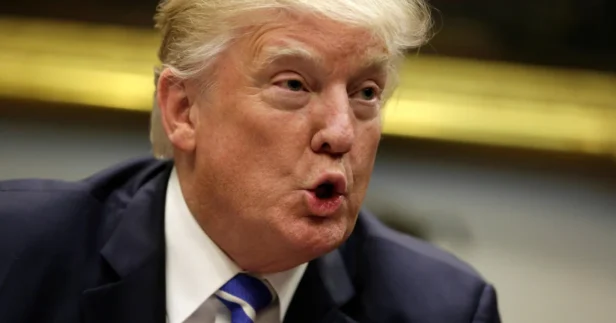
U.S. President Donald Trump is expected to press for progress on the stalled Gaza ceasefire when he meets Israeli Prime Minister Benjamin Netanyahu on Monday, with discussions also set to cover security concerns involving Hezbollah in Lebanon and Iran.
Netanyahu confirmed earlier this month that Trump had invited him for talks, as Washington intensifies efforts to establish a transitional administration and deploy an international security force in Gaza plans Israel has so far approached with caution.
The meeting, scheduled to take place at Trump’s Mar-a-Lago residence in Florida, is expected to focus on the second phase of the Gaza ceasefire, as well as regional security challenges linked to Iran and Lebanon. Washington has played a central role in brokering ceasefires on all three fronts, though Israel remains wary that its adversaries could use the lull to rebuild their military capabilities.
Under a plan proposed by Trump and agreed to by Israel and Hamas in October, the war in Gaza would end with Israel withdrawing from the enclave and Hamas relinquishing its weapons and governing authority. The initial phase included a limited Israeli pullback, increased humanitarian access, and the exchange of hostages for Palestinian detainees.
However, an Israeli official close to Netanyahu said the prime minister would insist that Hamas complete the first phase by returning the remains of the last Israeli hostage believed to be in Gaza before negotiations move forward. The family of the deceased hostage, Ran Gvili, has joined Netanyahu’s delegation and is expected to meet senior U.S. officials.
Israel has also withheld the reopening of the Rafah border crossing between Gaza and Egypt—another element of the plan—pending the return of Gvili’s remains.
Analysts say domestic political pressures may limit Netanyahu’s room for manoeuvre. With elections due in October, he is keen to avoid a confrontation with Trump. “Trump wants progress, and Netanyahu will likely have to make concessions,” said Chuck Freilich, a political scientist at Tel Aviv University and former Israeli deputy national security adviser.
Despite the ceasefire, tensions remain high. The United States has called for the rapid establishment of a transitional Palestinian administration made up of technocrats, ahead of the deployment of an international security force authorised by a United Nations Security Council resolution in November.
Also Read: Gaza ceasefire holds, Israel has right to hit back if attacked – Trump
Israel and Hamas have repeatedly accused each other of violating the agreement, and key elements of the next phase remain unresolved. Hamas has refused to disarm and has reasserted control in parts of Gaza, while Israeli forces still occupy roughly half of the territory. Israel has warned it will resume military operations if Hamas does not give up its weapons.
Although large-scale fighting has eased, violence has not ceased entirely. Since the truce began in October, Israeli strikes have reportedly killed more than 400 Palestinians, most of them civilians, while Palestinian militants have killed three Israeli soldiers.
The ceasefire in Lebanon is also under strain. A U.S.-backed agreement in November ended over a year of hostilities between Israel and Hezbollah and required the gradual disarmament of the Iran-backed group in southern Lebanon. While Lebanese authorities say progress has been made, Hezbollah has resisted disarmament, prompting Israel to carry out frequent strikes aimed at preventing the group from rearming.
Iran’s activities are also expected to feature prominently in the talks. Tehran recently conducted missile exercises, prompting renewed concern in Israel. Netanyahu has said Israel is not seeking confrontation but will raise intelligence assessments of Iran’s military build-up during discussions with Trump.
Trump, who ordered U.S. strikes on Iranian nuclear facilities in June, has since signalled openness to renewed diplomatic engagement with Tehran.
