
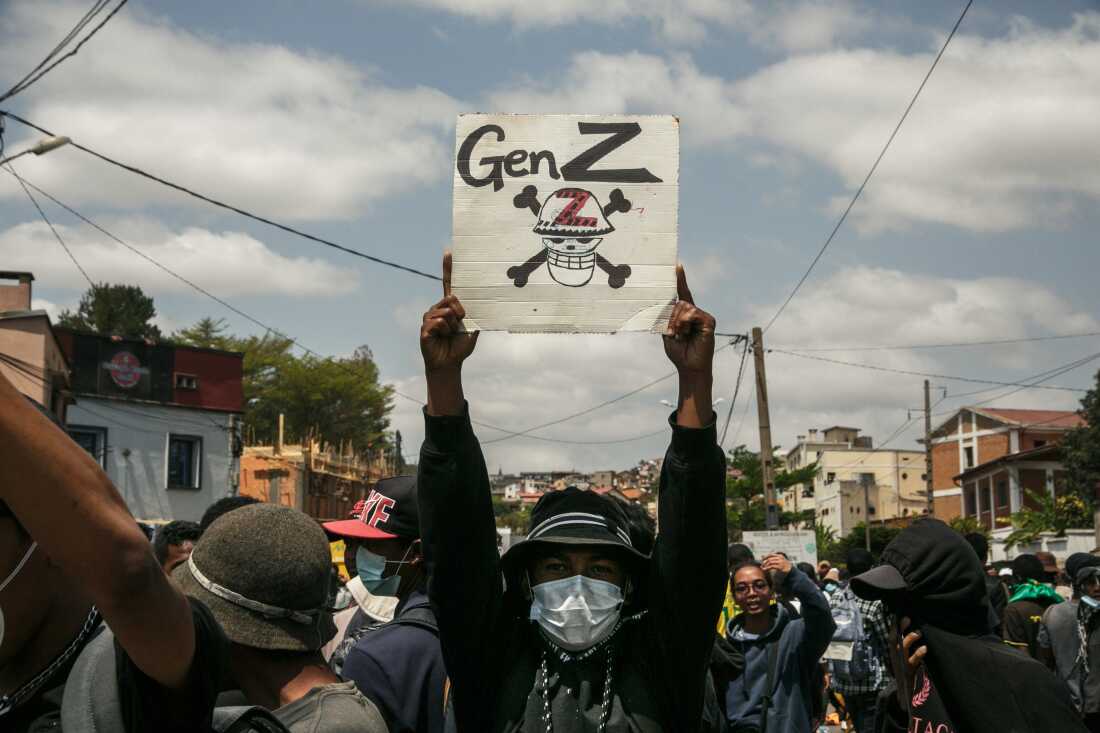
Organisers of Madagascar’s youth-led anti-government protests on Thursday announced a 24-hour suspension of marches in the capital, Antananarivo, citing concerns for demonstrators’ health and stamina. However, protests continued in several other parts of the island nation.
The rallies, inspired by youth-led “Gen Z” movements in Kenya and Nepal, represent the largest wave of unrest in Madagascar in years and pose a serious challenge to President Andry Rajoelina, who secured re-election in 2023.
“This is not a retreat but a strategy: we will come back together more united, stronger,” protest leaders under the banner of Gen Z Madagascar declared in a Facebook post, stressing that the pause was temporary.
The United Nations says at least 22 people have been killed and more than 100 injured since the demonstrations began last week. The government, however, disputes those figures and has remained silent on the suspension announcement.
Anger Over Utilities, Governance
The protests first erupted in Antananarivo over worsening water shortages and power cuts before spreading nationwide. On Monday, President Rajoelina dissolved his government in a bid to ease public anger, but demonstrators say the move falls short of their demands.
Protesters are calling for Rajoelina’s resignation, the dissolution of the election commission, the Senate, and the country’s top court.
On Thursday, hundreds marched in Toliara, about 925 kilometres south of the capital, chanting “Rajoelina Out” and carrying banners condemning the president, according to footage aired by privately-owned Radio Télévision Siteny. Demonstrations also took place in Diego Suarez, where protesters marched under police escort, Fitaproduction reported.
Also Read: Madagascar Protests Escalate as Rajoelina Faces Resignation Calls
Despite its natural resources and reliance on agriculture and tourism, Madagascar remains one of Africa’s poorest countries. Since independence from France in 1960, income per capita has dropped by nearly half, the World Bank notes, blaming entrenched elite dominance and a lack of transparency in governance.
“The protests are not merely about utilities or governance failures; they are a rejection of a political order that has remained fundamentally unchanged for decades,” said Ketakandriana Rafitoson, global vice-chair of Transparency International.
“Elite networks continue to capture state institutions, siphon public resources, and weaponise poverty to maintain control,” added Rafitoson, who is also Malagasy.
Some demonstrators have carried flags bearing a grinning skull in a straw hat a popular Japanese manga symbol now adopted as a rallying emblem by young protest movements worldwide.
Meanwhile, Madagascar’s Senate met on Thursday to deliberate potential nominees for prime minister, after failing to reach consensus in earlier rounds.
